We Review Grand Theft Auto 6
Nov 18, 2026
The core judgment from the reported Grand Theft Auto 6 playthrough is simple: the game’s most striking advance is not map size alone, but the density of believable interaction inside that map. During the first dozen-or-so hours, the reviewer fixed a leaky roof, collected some rum from a shady liquor store, played way too many games of pool, read a book about World War 2 soldiers with a penchant for teabagging, and caught a lot of fish. Over 100 hours later, the reviewer had completely lost track of all the things seen and done within GTA 6’s astounding open world, and saw no real limit to the amount of time they could spend endlessly exploring and interacting with Vice City and the massive area surrounding it. By the time the credits appeared after almost 120 hours of hijinks, there were still vast sections of the map yet to be visited. That detail matters: it suggests Rockstar has shifted the series from “go to the next marker” toward a world that can absorb idle curiosity without treating it as a failure state.
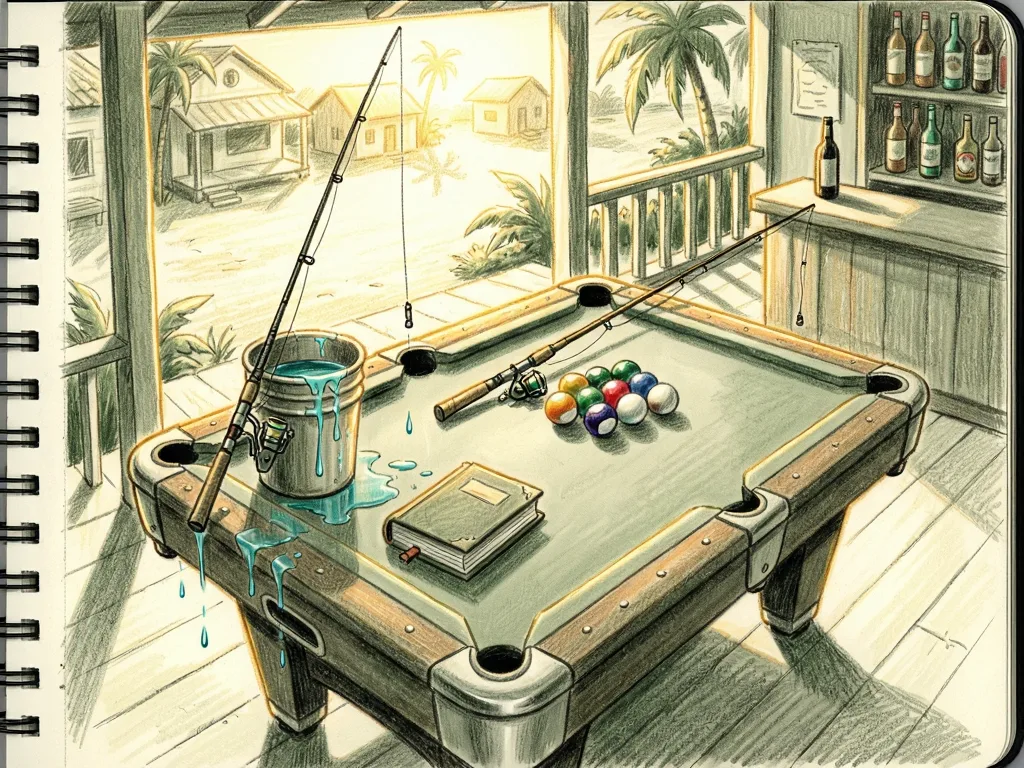
The first dozen-or-so hours: absurdity as proof of a populated world
The reviewer’s earliest hours are not summarized by a checklist of missions. They are summarized by strange, specific, player-created incidents. On the more ridiculous end of the spectrum, they temporarily borrowed a luxury yacht called Party on the Poop Deck before running it aground and drinking its owner’s beer. They slapped the crap out of a bloke who cursed at them. They found a finger in their horniest neighbour’s plumbing. They threatened an alligator wearing a hat. They got mugged by a drunk sea captain with a harpoon gun before stealing his weapon while he peed in a garden.
Those moments are useful as evidence because they show what GTA 6 seems to be selling beyond its story. The game is not only asking the player to follow Jason Duval and Lucia Caminos through a crime plot. It is asking the player to believe that Vice City and the Leonida Keys contain objects, people, animals, boats, buildings, furniture, plumbing, weapons, and small humiliations that can all collide. A world that permits a harpoon gun, a yacht, a finger in a pipe, a hat-wearing alligator, and a garden urination to become part of the same memory is a world built to feel reactive.
That reactive quality also explains why the reviewer says there is no real limit to how much time they could spend in GTA 6. The open world does not feel like a series of gates opened by story progress. It feels like a place where the story is one thread among many. The well-paced story effectively nudged the reviewer around the map, but the reviewer still had not visited vast sections of it despite reaching the credits after almost 120 hours. That is not necessarily a flaw in pacing. It is a sign that the world is large enough to make a conventional quest structure feel like a tour rather than a cage.
Jason Duval and Lucia Caminos: escape, not empire building
Jason Duval and Lucia Caminos are described as an interesting pair of playable characters, and unlike any leads that have come before them in the series. Their motivations and goals are very different from the main characters of previous GTA games. Their priority is really about escape rather than revenge or empire building. That is a meaningful tonal shift. Earlier GTA leads often chase power, money, loyalty, or territory. Here, the reported story gives the player two people whose basic desire is to get out from under circumstances that are closing in on them.
They are not angels. The reviewer notes that it is invariably their recklessness as small-time crooks that puts them in the wrong place at the wrong time. But the overall sliminess of their far more powerful antagonists makes the couple easy to root for throughout their story, which unfolds like four or five seasons of a prestige TV show. The comparison to prestige television is not just decorative. It suggests that the game’s narrative design is trying to sustain long-form character interest rather than only deliver one-off crime set pieces.
Jason is a capable yet calm and softly spoken army veteran, and the reviewer calls him a natural fit for GTA. He remains mostly a mystery throughout, but his quiet cowboy demeanour does not stray too far from Red Dead Redemption 2’s Arthur Morgan, and the reviewer likes that. Lucia, meanwhile, is headstrong but not abrasive, confident but not cocky, and gets to showcase a wider range of emotions. The reviewer calls her easily the most likeable and multifaceted woman in the history of the series, and says it is abundantly clear that GTA’s writing has grown up dramatically in the last 13 years. The reviewer also states that RDR2 has had nothing but positive effects on its sister series.
That last point is important for understanding why GTA 6 may feel different even when it uses familiar ingredients. Red Dead Redemption 2 was not just another open world with more detail. It pushed Rockstar toward slower, more human character writing, more physical nuance, and more patience with small moments. GTA 6 appears to inherit that lesson while keeping its own satirical, lawless energy. Jason and Lucia are not noble heroes. They are crooks. But the game’s reported writing gives them emotional texture, and the world’s detail gives their choices weight.
The reviewer’s own play style also reinforces this. Jason and Lucia maintained a professional criminal rating throughout thanks to a style that opted for clean escapes, stealth, and non-lethal takedowns against general law enforcement if feasible. The reviewer disabled vehicles by popping tyres rather than pummelling the windscreens with gunfire, and left civilians unharmed as often as possible. By the end of the story, the reviewer had only killed 11 civilians, all of which would have been unfortunate accidents. That statistic is not just a number. It shows how much the game can bend toward restraint if the player wants it. GTA 6 may still be a crime simulator, but the reported experience suggests it can be played as a tense escape story rather than a mass-casualty power fantasy.
The opening phase: systems first, Vice City later
We play mostly as Jason for the opening phase of Chapter 1, and the reviewer calls that a smart way of easing players into the many systems they need to come to grips with. There is a full help menu to explain any controls or actions you might forget. That may sound like a small feature, but in a world this dense it matters. A game that lets you pop tyres, threaten alligators, borrow yachts, open drink cans one-handed, slink beside a vehicle when the door cannot fully open, and interact with in-game consoles needs a reference layer.
In the time it takes to start and finish many typical shooters and action games, the reviewer says they lived several days of a second life as Jason, who spends a good deal of his time on the wrong side of the law couriering drug shipments up and down the Leonida Keys but otherwise keeps a low profile in the relatively quiet tourist town he calls home. There had been strife and shootouts, sure, but the main thread of the story had barely begun. Lucia was yet to re-enter the picture, the reviewer had not even visited Vice City itself at all, and they were entirely content to while away hours messing around with GTA 6’s many, many distractions.
That sequence reveals the design priority. The game does not rush the player into the postcard version of Vice City. It lets the periphery breathe. The Leonida Keys, the tourist town, the drug shipments, the low-profile routine, and the small-time criminal work all create a sense of place before the larger narrative pulls the player inward. For readers, this suggests that GTA 6 may reward patience more than previous entries in the series. The story is present, but the world is not merely a corridor to it.
The distractions are part of the argument
It is ironic, perhaps, that some of GTA 6’s greatest distractions are actually games themselves. Jason has a PlayStation-style console in his home featuring three playable games, and his local bar has a darkly humorous riff on classic Buck Hunter cabinets that the reviewer kept getting sucked into. Straight away, the reviewer says it is evident this is not a world of painted-on backdrops and empty props. This is a world that feels more lived-in and real than anything the reviewer has ever played, and one you can interact with at a level never seen before in the series.
The reviewer acknowledges that it was a long wait, but says Rockstar has truly pushed the boat out, which, handily enough, is also something you can do yourself in GTA 6 if you find yourself beached. That joke is also a design clue. The world does not merely describe its own interactivity. It lets the player prove it. You can push a boat. You can play games inside the game. You can notice things later. You can miss sections of the map. You can spend hours doing things that the story does not require.
The reviewer also points to GTA 6: Photo Mode Gallery and GTA 6 Launch Screenshots as supporting visual evidence of the game’s presentation. Those materials matter because they reinforce the same claim: this is a game built around surfaces that can be looked at, framed, and inhabited. The visual evidence is not only about spectacle. It is about whether the world can survive being paused, examined, and photographed without collapsing into generic background.
Life in Stereo: music, references, and needle drops as world-building
The reviewer admits to being an easy mark for a game like this, saying they love action movies, car chases, and dad rock, and that GTA 6 holds precisely the same things near and dear. The reviewer will not list the long catalogue of movie references spotted since it is way more satisfying to recognise them yourself. They also will not spoil any of the specific needle drops Rockstar finds itself indulging in more than ever, one of which has become one of the reviewer’s favourite moments in the entire series.
This is a useful distinction. A game can be full of references, but references only become world-building when they are woven into the texture of play. The reviewer says GTA 6 does take over the dial a bit more than usual for key moments, but it is always to great effect, and it certainly has not come at the cost of any reduced focus on radio stations. The mammoth tracklist otherwise includes the return of classic stations V-Rock, Emotion, and Vice City FM, all of which are absolutely overflowing with solid gold, as is the new metal station The Chamber. Just those four stations alone, which account for the lion share of the reviewer’s listening, feature nearly 200 songs between them.
Nearly 200 songs across four stations is not only a content number. It is a statement about identity. GTA 5 proved that radio could be a core part of the series’ cultural texture. GTA 6 appears to expand that idea. The stations are not background noise; they are part of the reason the world feels like a place with taste, mood, history, and genre. A late drive through Vice City or along the Leonida Keys is not just driving. It is a curated collision of landscape, vehicle, lighting, music, and reference.
The technical argument: locked to 30 frames-per-second, but polished
The reviewer frames the presentation as a considerable blow for any company trying to sell them a next-generation console in the near future, saying GTA 6 also looks even better than it sounds. They freely concede they have never been fussy about frame rates, so long as they do not constantly fluctuate. For all the hand-wringing observed over the fact that GTA 6 is locked to 30 frames-per-second, just as Rockstar’s most recent cowboy masterpiece was, the reviewer simply did not care in the slightest while actually playing.
What matters, according to the reviewer, is that it looks absolutely incredible and runs smoothly and reliably on a standard PS5. They find all the brilliant visual flourishes far more important. Those flourishes include the concentric rings of ripples on water due to helicopter rotor downwash, the almost imperceptible line of sweat that appears on Lucia’s forehead after a brisk jog, the buckling of the fabric on a shirt as torsos twist, and the temporary dents on a punching bag as you strike it. The reviewer also points to the way long hair rises, whips, and falls over a character’s shoulders and back, whether that is Lucia’s ponytail swinging back and forth or Jason’s luxurious mullet hanging in the air over a motorcycle jump during its brief moment of zero gravity.
This level of detail is seen in other animations, too. The reviewer highlights dynamic fights which never appear to play out the same way, and the bespoke solutions for characters to slink along the side of a vehicle if the door cannot fully open. There are not just animations for operating longarm weapons one-handed if your other hand is full; there is a separate animation for opening drink cans with one hand as well.
If a sufficiently stable and properly paced 30fps is the route to GTA 6 looking and functioning the way it does, bug-free, then the reviewer has no complaints. The sheer density of traffic and pedestrians is stunning, and the graphics at night are supernaturally good. Rockstar allows the world to be realistically dark, giving the lighting room to really flex. The reviewer calls it honestly jaw-dropping at street level with car headlights and taillights piercing the dark, down on the beach during a late evening storm, and from high above where every light source in the city seems to be individually visible from a distance.
The Microsoft Flight Simulator analogy is telling. The reviewer says: just imagine Microsoft Flight Simulator, only after you land, you can leave the airport, hit a drive-thru, and grab a burger. That comparison is not about flight simulation. It is about the gap between looking like a place and being able to behave in that place. GTA 6, in this account, closes that gap. The world is not only photogenic. It is operational.
There is still uncertainty in the technical argument. A locked 30 frames-per-second on a standard PS5 may be acceptable for one reviewer who prioritizes visual density and stability, but not every player treats frame rate the same way. The reviewer’s indifference to 30fps is a subjective stance, not a universal one. Still, the reported experience makes Rockstar’s case clear: if the choice is between a more conventional frame rate and a world packed with physical detail, GTA 6 appears to have chosen the world.
The Real Thing: cars, boats, and the economics of ownership
The feeling of authenticity is ever-present, and it extends across every element of what you see on screen. For instance, the reviewer notes that it is not just that cars look incredible, or that they have animated drivetrains, which is something you do not get in even the very best racing games. It is that they are not just cars. They are all someone’s car.
Maybe the bumper stickers have a story to tell. Maybe there is bespoke clutter in the tray or trunk. Maybe they belong to a specific business on the map; the reviewer is still seeing vans driving around town with graphics and logos they have not noticed before. Maybe they have lived a hard life outside in the harsh Leonida sun, the clear coat has flaked away, and they now carry a patina of road grime and dust. Maybe the interior surfaces and seats are worn. Maybe they have been poorly maintained and belch black exhaust smoke. Maybe they have been carefully customised with dazzling neons and truck nuts.
This attention to detail extends to boats, too. Not only have most of them been christened with unique names, but they too are filled with various personal belongings and custom fit-outs. And yes, they can be launched from trailers, put back on trailers, and towed to another boat ramp on the other side of the map if you wish. The reviewer adores this, and suspects those who really want to roleplay in this world will too.
That sentence is central to understanding the game’s appeal. GTA 6 is not only a crime story. It is an ownership story. Cars, boats, trailers, garages, tuning shops, car salerooms, and motorsport venues all over the map turn movement into identity. You are not simply transporting a character from point A to point B. You are choosing what your character’s life looks like while doing it.
The reviewer says GTA 6’s dedication to its in-universe car culture is honestly ludicrous, and they love it. There are tuning shops, car salerooms, and motorsport venues all over the map. The fully modelled engines can be restored and switched out. Exhaust and supercharger mods have noticeable effects on a car’s sound. There is even a difference in the texture of a hasty Pay 'n' Spray rush job, which always results in a visible orange peel effect, and a professional respray at a dedicated customisation shop.
That distinction matters because it turns even cheap fixes into visible choices. In many open-world games, a damaged car becomes cosmetic noise. In GTA 6, the damage, the repair, the paint quality, the engine sound, and the wear on the interior all communicate history. A car can look like it has a past. That is not just graphical fidelity. It is environmental storytelling at the vehicle level.
Damage, handling, and the driving template
The improvements to car damage are massive as well, with GTA 6 more closely resembling something like a slightly scaled-back Wreckfest rather than GTA 5. Lights and mirrors fall off, panels bend and buckle dramatically, and entire wheels can be ripped off before your car becomes fully disabled. Belt an assailant’s head against a nearby car, and it will even crater realistically where they bounced off the metal.
Car handling is also the strongest it has ever been in the series, and it feels a lot more like a refined version of GTA 4 than GTA 5, which the reviewer calls great news. It brings back a very tangible sense of heft, only without the overly exaggerated suspension wallow. You can really slide cars properly here, and throwing them into 90-degree corners and perching them on the throttle is now total Hollywood highlight reel stuff.
The only thing that really gave the reviewer pause was the motorcycle handling, which is quite upright and stiff compared to previous GTAs. The reviewer does not hate it, but says it does feel like it comes from a different game altogether. That is a notable risk. If cars feel like the strongest expression of the new handling philosophy, but motorcycles feel disconnected, then the game may have different centers of gravity. Players who live on two wheels may need to adjust their expectations.
The decision to opt for more realistic street widths makes for a way more authentic and engaging driving experience, whether you are cutting up cars on the freeway or cruising the busy beachside strip. GTA 6 is not afraid to trap you behind traffic or roadworks and force you into quick decisions. Do you take the footpath? Do you push through and risk damage? The reviewer says it is always asking you to think and act, and creates a dynamic to keep you fully engaged.
That is the driving design in a sentence. GTA 6 does not want traffic to be a minor inconvenience. It wants traffic to be part of the game. Roadworks are not filler. Street width is not realism for realism’s sake. These constraints create moment-to-moment decisions, and those decisions make the world feel like a system rather than a playground.
After a certain point in the story, you will get full control to assign Jason and Lucia personal vehicles that actually speak to you, breaking from the preset personal vehicles Michael, Franklin, and Trevor had in GTA 5. For instance, the reviewer’s Jason main ride eventually became a fully-built, Marty McFly-style black truck that they sought out and customised specifically. The reviewer really appreciates being able to control this element.
That change is larger than it sounds. Preset personal vehicles in GTA 5 helped define each character’s identity, but they were still assigned to the player. In this account, GTA 6 lets the player choose the vehicle that defines the character. The reviewer’s black truck is not just a fast car. It is a statement about Jason’s taste, budget, priorities, and criminal life. If the story gives Jason and Lucia more emotional interiority, and the vehicle system lets the player express that interiority through objects, then GTA 6 is trying to make ownership part of characterization.
What this means for readers who care about open worlds
For players, the reported experience suggests GTA 6 is best understood as a density machine. It is not simply bigger than GTA 5. It appears more willing to let small objects, small animations, small decisions, and small indignities accumulate into a sense of place. The first dozen-or-so hours are not defined by a single mission. They are defined by a leaky roof, rum, pool, fish, a World War 2 book, a yacht named Party on the Poop Deck, a harpoon gun, an alligator wearing a hat, and a finger in plumbing. Those are not marketing bullet points. They are proof that the game expects the player to notice weirdness and respond to it.
For the series, the reported shift in Jason Duval and Lucia Caminos is equally important. They are not built around revenge or empire building. They are built around escape. That makes them different from previous leads, and it changes the moral texture of the story. They are small-time crooks, not angels, but the antagonists are slimier and more powerful. The reviewer’s play style, which maintained a professional criminal rating, avoided gunfire where possible, popped tyres instead of smashing windscreens, and killed only 11 civilians by the end, shows that the game can support a less destructive read of its crime fiction.
For the wider open-world template, GTA 6 may force other games to answer a harder question: does your world merely look large, or does it behave like a place? The reviewer’s examples all point toward behavior. Animated drivetrains. Personalized cars. Boats that can be launched, trailered, and towed across the map. Tuning shops. Car salerooms. Motorsport venues. Dynamic fights. Bespoke vehicle-door animations. One-handed drink cans. Helicopter rotor downwash ripples. Sweat on Lucia’s forehead after a brisk jog. A punching bag dent. A shirt twisting with a torso. A mullet hanging in air during a motorcycle jump.
Those are not isolated graphics features. They are the evidence base for the reviewer’s claim that GTA 6 feels more lived-in and real than anything they have ever played. The game seems to treat realism not as a visual style, but as a set of systems that keep responding after the mission ends.
Uncertainties and risks that the reported experience exposes
The review is persuasive, but it is also built on one reviewer’s long, highly favorable playthrough on a standard PS5. The locked 30 frames-per-second may be a non-issue for a player who prioritizes visual density and stability, but it remains a potential friction point for players who care more about responsiveness than spectacle. The reviewer’s own indifference does not settle the debate; it simply shows that GTA 6 can win over players who accept that trade-off.
The motorcycle handling is another visible risk. If cars feel like the strongest expression of GTA 6’s new driving model, while motorcycles feel upright, stiff, and almost like they come from a different game, then the game may have uneven centers of polish. That does not diminish the reported car experience, but it does suggest that not every vehicle type may feel equally integrated.
There is also uncertainty around how far the personal vehicle system extends. The reviewer begins to discuss full control over assigning Jason and Lucia personal vehicles after a certain point in the story, and mentions a fully-built, Marty McFly-style black truck sought out and customised specifically. The appreciation for controlling that element is clear, but the reported account does not fully detail how deep that system runs for all players, all vehicles, or all playstyles.
Finally, the sheer amount of unvisited world after almost 120 hours is both the game’s strength and its risk. A world that remains vast after that much play can feel endlessly rich. It can also feel like it asks too much of a player’s patience. The reviewer says they have never played anything that hit quite like GTA 6 and has zero plans to stop playing it. That is a powerful endorsement. It also sets a high bar: GTA 6 is being presented not just as a game with a story, but as a second life with its own gravity.
Recommend Apps


