A Barbie Rewind Review Finds a Nostalgia-Filled Collection That Fails to Hit the Mark
Nov 19, 2026
Atari and Digital Eclipse Put 19 Barbie Games in the PC Version of Barbie Rewind, but History and Integration Fall Short
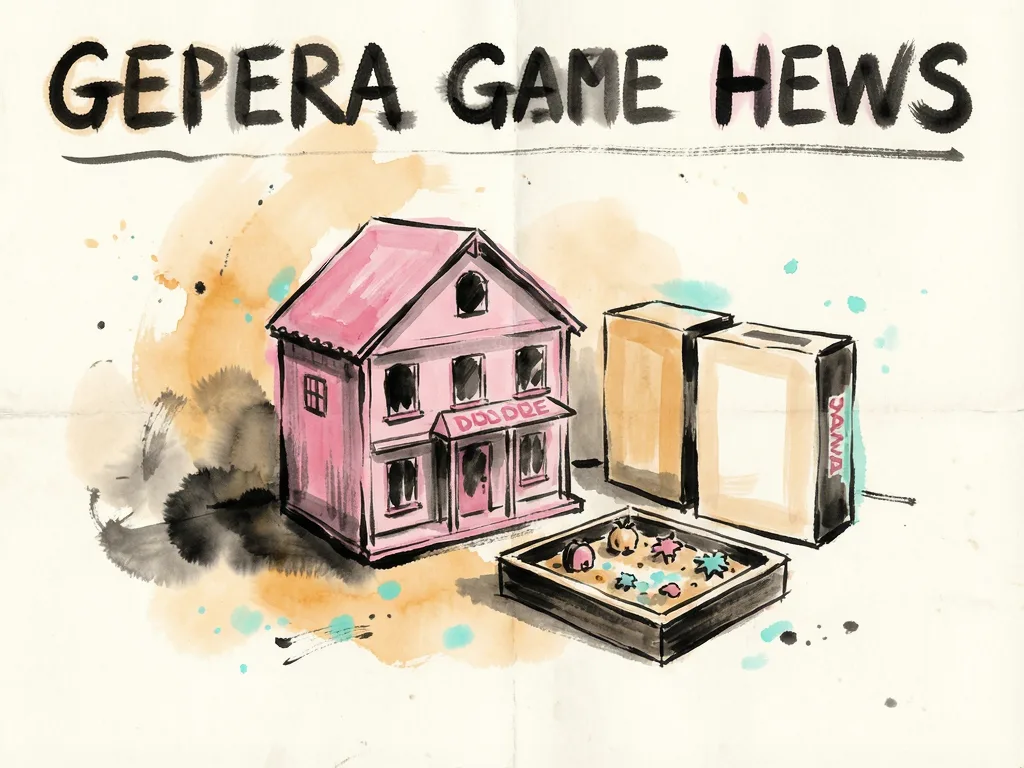
Barbie Rewind is best understood as a preservation-first retro collection, not a polished modern showcase. Atari and Digital Eclipse have assembled a package built around Barbie games from 1991 through 2007, adding emulation conveniences, a museum-like Catalog, a digital Lookbook, and a new 2D sandbox called Let's Decorate. The strength of the project is its breadth and its attempt to treat Barbie's gaming history as something worth collecting. Its weakness is that the package still feels uneven: several games are frustrating or dull, the historical material is relatively thin, classic PC games are absent despite being acknowledged, and the unlock system for the new decoration game is poorly connected to the retro collection.
What the Package Actually Contains
The core of Barbie Rewind is a set of Barbie games that stretches from NES Barbie, released in 1991, to Barbie as the Island Princess, released in 2007 for Game Boy Advance. The review text describes the collection as 19 games. It notes that Super Model and the previously unreleased Vacation Adventure have separate versions for Super Nintendo and Genesis, and that these versions are counted separately in the game list.
At the same time, the included product description says the package contains 16 Barbie video games from 1991 through 2007. Titles named in that description include Barbie Pet Rescue, Barbie Horse Adventures: Blue Ribbon Race, and the never-before-released Barbie: Vacation Adventure. The review body and the product copy therefore present two different counts for the same collection. The separate Super Nintendo and Genesis versions help explain how a game list can grow, but the difference remains a notable inconsistency in the package's presentation.
The games themselves cover a wide range of formats and genres. Barbie has been a well-known American doll brand for decades, and Mattel tried to make a splash in the market by featuring the character in many games. As movies and series based on the doll evolved over time, the games did too, sometimes appearing alongside other multimedia projects. In Barbie Rewind, the selection includes platformers, minigame packs, mystery adventures, and sports simulations.
That variety is one of the collection's clearest strengths. A player interested in retro Barbie games can sample several different kinds of old software without needing separate hardware or original cartridges. Still, variety does not guarantee quality. The review states plainly that the titles are mixed. NES Barbie can feel significantly frustrating, while The Barbie Diaries: High School Mystery feels a little boring in execution. By contrast, Barbie Super Model's combination of minigames and Secret Agent Barbie's stealthy platforming are described as good highlights.
This split matters for the reader because the package sells nostalgia as a complete experience. If the user only wants a representative walk through Barbie's retro era, the collection gives enough surface area to explore. If the user expects a consistently playable set of games, the weak entries become harder to ignore. The best parts stand out, but the worst parts also stand out.
How Emulation Tools Change the Experience
Like many retro collections, Barbie Rewind uses emulation-era conveniences to soften the friction of old design. Players can save and stop playing at almost any time instead of depending on specific saving moments or passwords. A rewind feature can help fix mistakes. Cheats for invulnerability or for unlocking levels and minigames ahead of time are also available.
These tools do more than add accessibility. They change the relationship between the player and the games. A frustrating platformer becomes easier to tolerate when a player can rewind a mistake. A password-based old game becomes less punishing when saving is flexible. A locked minigame becomes available without grinding through older difficulty. For a collection that includes titles with mixed quality, these features are essential rather than optional.
The presentation settings also aim to improve comfort. The package allows a simple filter and lets players expand the screen to cover more of the display. By default, it simulates a pink TV for console games or the screen borders of portable systems. That is a small detail, but it serves two purposes: it preserves the original viewing context, and it leans into nostalgia immersion.
The PC version reviewed shows that the package is not only a game archive. It also includes Let's Decorate, a brand new 2D sandbox. In that mode, players can adjust various rooms by placing objects, changing wallpapers, and changing floor tiles. Tasks are completed by sending photos to Barbie and friends, and more decoration options unlock over time.
The official product description frames this as a cozy and creative game. It says players can decorate the DreamHouse through the decades while playing classic Barbie games, using stunning pixel art and retro style. Barbie invites the player into her world and entrusts them with updating the DreamHouse using items from 65+ years of Barbie history. Players can choose from three retro DreamHouse designs for the exterior facade, walls, and floors, and can mix and match them from room to room. The description also says the furniture, decor, and accessories are inspired by real Barbie playsets throughout the decades, from a classic pink vanity to a '90s inflatable chair.
That side of the package has clear appeal. It gives players something active to do beyond opening old games. The product copy promises 250+ pieces of furniture, decor, and accessories to unlock. Ken, Teresa, and Christie also appear to ask for help with designs. A digital Lookbook lets players flip through pages of Barbie history, including stories behind some of the most iconic DreamHouses and playsets.
The decoration game is not just filler. It is presented as a way to express personal style while interacting with Barbie's brand history. It also connects to the retro collection through quests and unlockable items. The intended loop is simple: play retro Barbie games, complete quests, unlock more decoration options, and build a DreamHouse that reflects different eras.
A Museum-Like History That Stops Short of PC Classics
Digital Eclipse projects usually aim to go beyond a simple collection. Barbie Rewind follows that pattern with a museum-like Catalog menu. It explains details about the brand and its relationship with video games across console, handheld, and PC markets. This is the part of the package that most clearly signals a preservation intent.
The review says the historical details feel relatively superficial compared with the documentaries in a few other Digital Eclipse projects. That comparison sets a high bar, but it also points to a real limitation. Barbie Rewind has an educational layer, yet it does not feel as deep as what Digital Eclipse has done elsewhere.
One reason may be structural. The Barbie games in the collection come from different developers, and those developers had limited contact with the brand. The review notes that this likely does not provide such a rich panorama of the brand's developments as the documents uncovered to register Barbie's history with games. In other words, the collection can show many artifacts, but it cannot fully explain the industry context behind every one of them.
The most striking gap concerns PC gaming. The Catalog explores some of Barbie's history in PC gaming, but none of the classic games from that system are represented in the collection. That creates an awkward mismatch. The package acknowledges a platform's role in Barbie's gaming legacy, then does not include games from that platform.
For readers, this absence matters. Barbie Rewind presents itself as a history of Barbie in games, but it covers only part of that history. The review calls this a major oversight and suggests that Barbie's gaming legacy is far vaster than the projects represented here. It also leaves open whether future releases could dig more into that legacy.
This is where the collection's identity becomes less stable. It wants to be a retro anthology, a history lesson, and a new decoration game all at once. The museum-like Catalog gives it authority. The missing PC classics and relatively thin historical treatment weaken that authority. The project is ambitious enough to make the gaps visible, but not complete enough to close them.
The New Game Loop Has a Practical Flaw
The integration between Let's Decorate and the retro games is one of the collection's most interesting ideas. Extra items are meant to be unlocked by playing the retro games, creating a loop between the old and new parts of the package. All objects are somehow tied to Barbie's history, and the game mentions that detail outright for players who are curious to look into these origins.
In theory, this should make the retro games feel more purposeful. A player might open an old Barbie title not just for nostalgia, but to earn furniture, decor, or accessories for the DreamHouse. The new game could also become a reward system for exploring the archive.
In practice, the review finds the system flawed. The unlock path is only valid if the player reaches the specific achievements from within the Let's Decorate mode. If the player prioritizes the retro collection and dives straight into the games from the starting menu, they can miss unlockable items and have to redo everything in the new mode.
None of this is necessary to "beat" the new game, but it is disappointing. The package advertises integration, yet the integration can punish players for choosing the retro games directly. That is a design problem because it undermines the collection's own selling point. The retro games are supposed to be the foundation of the history, not a separate menu that accidentally leaves players behind.
This issue also affects how readers should judge the package. A casual player may enjoy letting the game guide them. A dedicated retro enthusiast may want to explore the collection first. Barbie Rewind works better for the former than the latter. The decoration game has good variety of items, and the retro games have enough charm to attract fans, but the unlock structure creates friction where the package should feel cohesive.
What the Mixed Quality Means for Buyers
The quality of the games is a central risk. The review says a few titles feel significantly frustrating or a little boring. That does not make the collection worthless, but it does mean players need to choose their expectations carefully. If someone values historical breadth, the package can be rewarding. If someone values polished playability, the collection's low points are hard to ignore.
The highlights are real. Barbie Super Model's minigame mix and Secret Agent Barbie's stealth platforming are singled out as good examples of what the package can offer. They suggest that some Barbie games have held up better than others, not just as nostalgia pieces but as playable experiences.
The weaker entries show the opposite. NES Barbie can feel frustrating, and The Barbie Diaries: High School Mystery can feel boring in execution. Those problems are not only about age. They affect whether the player wants to keep going. A rewind feature can help, but it cannot fully redesign a game that feels tedious or unfair.
This unevenness also reflects the nature of a licensed retro collection. The games were not all built by the same developer, and they were not all aiming for the same design standard. Some were tied to multimedia projects, some to brand expansion, some to different hardware capabilities. Barbie Rewind gathers that history, but it also inherits its inconsistencies.
Why This Package Still Has Value
Despite the flaws, Barbie Rewind is not a trivial product. It preserves games that would otherwise be scattered across old cartridges, old releases, and hard-to-access versions. The inclusion of the previously unreleased Vacation Adventure, especially in separate versions counted across platforms, gives the package archival significance. The pink TV framing, portable borders, save flexibility, rewind, and cheats show that the collection understands how modern players consume old software.
The Let's Decorate mode also adds value. It gives the package a contemporary reason to exist beyond the retro games. A 2D sandbox inspired by Barbie playsets, with 250+ pieces and a digital Lookbook, is more than a novelty. It turns Barbie's brand history into something players can interact with directly. The review says the new game has a good variety of items to make rooms look the way players want. That is a genuine strength.
The museum-like Catalog, even if superficial compared with other Digital Eclipse work, still frames Barbie games as part of a larger history. It connects console, handheld, and PC markets, and it gives context to the collection. The absence of classic PC games weakens the argument, but the Catalog still shows that the package is trying to be more than a simple emulator front end.
For readers, the value depends on what they want from retro collections. If the goal is to access a broad set of Barbie games from 1991 through 2007, Barbie Rewind delivers. If the goal is a complete historical survey, it does not. If the goal is a tightly integrated new game and retro archive, it comes close but stumbles.
The biggest uncertainty is whether this package satisfies the ambition it announces. It wants to celebrate Barbie's legacy in gaming, and it includes many of the right tools. But it covers only a portion of that legacy. It acknowledges PC gaming while excluding PC classics. It advertises unlockable integration while making the retro collection path less rewarding than the intended path. It includes new decoration content while some old games remain frustrating.
Barbie Rewind is therefore best seen as a partial success. It is a big pack that covers only a little of what Barbie has as a legacy in gaming. The museum-like Catalog and the new Let's Decorate game show how much value can come from digging into Barbie's history. But poor integration outside the Let's Decorate menu and the low quality of some games make the project feel like it should have dug more for the gems that are still left behind.
Recommend Apps


