Disney states that its AI-powered Star Wars Anzellans are not short-term playtests but a glimpse into the future of its parks.
Nov 19, 2026
The most important thing about Disney’s new Anzellans is not that they are small Star Wars creatures. It is that they represent a shift in how Disney’s Imagineering team and its technology partners are turning Audio-Animatronics from fixed show pieces into sensor-aware characters that can appear to react to guests in real time. The three Anzellans named Vilo Vele, Kado Bre'a, and Jibu Bre'a are the same species as Babu Frik from The Rise of Skywalker. They are positioned together in a crate, can move, look around, interact with one another, and use cameras, microphones, sensors, and AI to “read the room.”
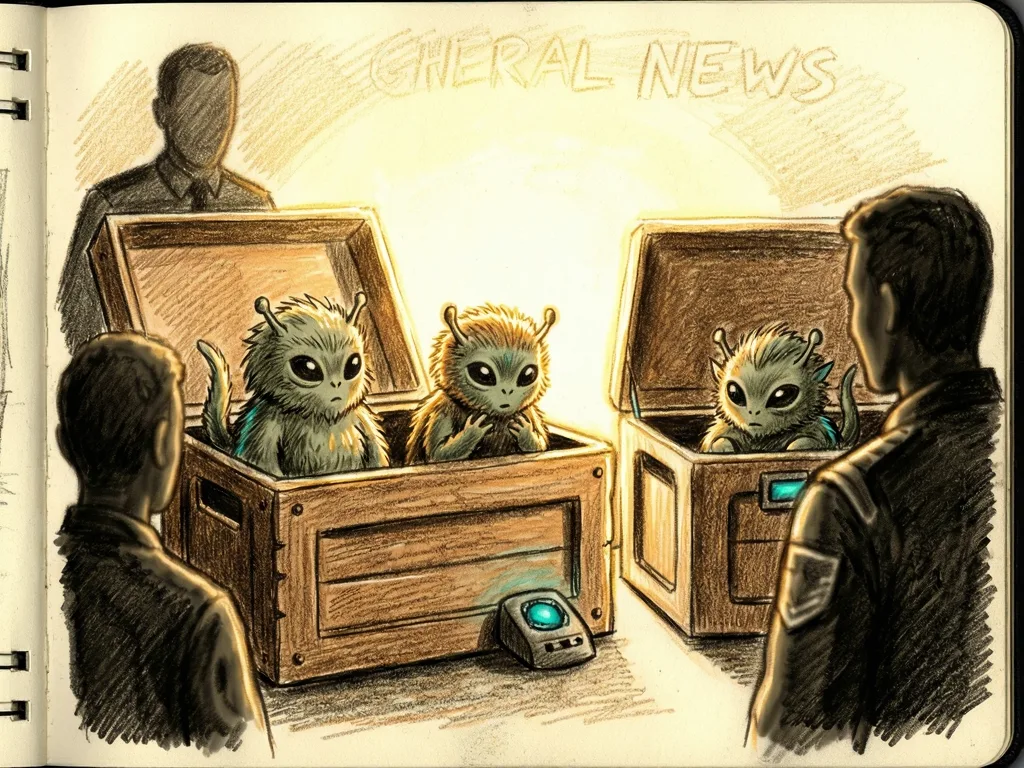
The source article, which also included Facebook, X, Whatsapp, Reddit, Pinterest, Flipboard, Threads and Email sharing options, frames the technology around a familiar theme-park moment: walking through Black Spire Outpost on Batuu, the setting for Star Wars: Galaxy's Edge at Disneyland or Disney World, stepping into a shop while looking for a certain color of kyber crystal, a cold brew black caf, or a new piece of Star Wars merchandise, and being stopped by a small creature that begins talking to you.
That is the core promise: not a larger spectacle, but a more responsive character encounter.
The key change is perception and selection, not generative dialogue
Disney’s long history with Audio-Animatronics goes back to Walt Disney's Enchanted Tiki Room and continues through increasingly sophisticated figures in attractions such as Pirates of the Caribbean. The Anzellans are presented as “our most advanced Audio-Animatronics in the world,” according to Kyle Laughlin, Senior Vice President of Walt Disney Imagineering research and development and Technology and Engineering.
But the advancement is not that the characters are writing their own lines. Laughlin made clear that AI is not writing dialogue or inventing personalities. That remains the work of Disney’s Imagineers. Every line is written by Imagineers and prerecorded. Every character’s personality and movements are designed by the creative team. AI selects the appropriate response and animation based on what is happening in the moment.
In practice, that means an Anzellan might shriek with concern if it recognizes that a guest is wearing an outfit that screams “dark side,” or cheer with excitement after spotting a birthday button. If a guest speaks directly to one of the characters, it can respond accordingly. The interaction is meant to feel spontaneous, but the words and character behaviors remain under Disney’s creative control.
That distinction is central to the announcement. Disney is not presenting a character that improvises freely. It is presenting a character that can understand signals from its environment and choose from a designed set of responses. Samira Panah Bakhtiar, General Manager of Telco, Media & Entertainment, Games, Advertising, and Sports at AWS, described the division in simple terms: “AWS I think brought the intelligence, Imagineering brought the brawn.”
A crate of characters is built on Disney’s robot platform
The Anzellans are not an isolated experiment. They sit within a broader Imagineering effort to bring robotics and high-tech Audio-Animatronics closer together. Laughlin has previously discussed Disney’s characters with the source reporter, including the BDX droids that have been roaming Galaxy's Edge and Olaf, the free-roaming robotic snowman that Imagineering has brought to Disneyland Paris and Hong Kong Disneyland.
Olaf and the BDX droids may look very different from traditional Audio-Animatronics, but they are increasingly connected behind the scenes. The Anzellans are built on the same robotic character platform that powers Olaf and the BDX droids. That is notable because the Anzellans are not roaming around on their own. They are three characters working together in one environment, responding to guests and to each other.
The source states that there is no other Cast Member controlling the experience or puppeteering it. Those decisions are made by the character, in real time. Laughlin describes the Anzellans as a hybrid, combining elements of robotics and Audio-Animatronics with a level of intelligence that Disney has not previously delivered in one of these characters.
“This is our most intelligent character that we've created,” he said.
Hardware matters here. Laughlin explained that Olaf can move around and interact with his surroundings, but does not have onboard cameras or microphones. The Anzellans do, along with additional sensors that help them understand their environment.
That allows a more personal-feeling encounter. If a guest approaches the crate with a group of friends, the Anzellans can understand that multiple people are standing in front of them, determine who is speaking, and look that person directly in the eyes while responding in their own mix of English and Anzellan.
AWS supplies the intelligence, Disney keeps the story
Disney and AWS have worked together for more than a decade, including on the infrastructure supporting Disney+, which turns seven this week. The Anzellans take that partnership in a different direction by bringing AWS’s cloud and AI capabilities into a physical character experience.
The project came together quickly. Laughlin said the teams worked together over a matter of months. The opportunity to collaborate with the filmmakers behind The Mandalorian & Grogu helped inform the direction of the characters.
The Anzellans use Amazon Bedrock, AWS’s managed AI service, to access different AI models. Laughlin confirmed that Imagineering is using vision models, large language models, and world models as part of the experience.
The architecture is not just about one character reacting to one guest. Each Anzellan is simultaneously tracking three things: the guest, what is happening in the surrounding environment, and what the other Anzellans are doing.
Bakhtiar explained that the system works like a show director, keeping the ensemble coherent so the characters do not talk over each other and the story stays consistent.
That is a meaningful departure from a traditional Audio-Animatronics show. Instead of following the same carefully timed sequence, the Anzellans can adjust their performances to the situation while still behaving like characters from the Star Wars universe.
AWS also used Kiro, its AI coding agent, to help turn Imagineering’s creative briefs into working software. Bakhtiar said the teams reviewed and approved the work at each stage, allowing ideas to move into testing more quickly. For Laughlin, that meant Imagineers could spend more time focusing on mechanical and electrical engineering, character skins, and the finer details that make the Anzellans believable.
Because Amazon Bedrock is not tied to one specific AI model, Disney can swap models as the technology improves, optimizing for performance, speed, latency, or cost without rebuilding the entire experience.
“We can be on the bleeding edge of whatever model is launched in order to bring the best experience possible,” Laughlin said.
That speed matters because a character needs to respond quickly enough for a conversation to feel natural.
Retail encounters may come before regular park appearances
The obvious question for guests is when they will actually meet the Anzellans. Disney is not saying yet.
The characters are scheduled to appear at AWS re:Invent in Las Vegas from November 30 through December 4, where attendees can meet them at the Customer Showcase at Caesars Forum.
This will not be their first public appearance. Disney confirmed to TechRadar that an earlier version of the Anzellans shown at D23 was also powered by AWS. But there is still no word on when or where they will become a regular guest experience at Disneyland or Disney World.
Laughlin offered one encouraging indication: “We’re excited for guests to meet them. We just won’t talk specifics today.”
The source also notes guests should expect to encounter the Anzellans indoors first. That detail points to a practical deployment path. Indoor retail environments are easier to control than open outdoor queues or crowded land-wide walkways. They also allow Disney to test guest proximity, sensor reliability, audio response, and character coordination in a smaller footprint.
Laughlin described the technology as an “experiential merchandise platform.” The idea is that a guest might walk into a Disney shop and have an unexpected interaction with a character, rather than needing to visit a designated meet-and-greet location.
That could change the texture of park retail. A shop no longer has to be only a place to buy merchandise. It can become a small, localized encounter space where the merchandise itself helps create the narrative reason for the interaction.
The concept is not necessarily limited to Star Wars. Laughlin said: “When we think about the future of where it's headed, you can imagine that any type of merchandise experience could be powered with characters from any of our franchises.”
That statement expands the significance of the Anzellans beyond the current crate of three tiny creatures. They may be a proof of concept for a broader model in which characters from multiple Disney franchises are embedded into retail or indoor environments, using AI-assisted perception to create short, responsive interactions.
The unresolved test is reliability, scale, and privacy
Disney has already shown more interactive characters in parks. The BDX droids have roamed Galaxy's Edge, and Olaf has interacted with guests at Disneyland Paris. But these experiences remain relatively limited compared with the many Audio-Animatronics and characters found throughout Disney’s parks.
The challenge now is scale. Laughlin sees the Anzellans as part of a broader shift in how Imagineering develops and introduces characters.
“More than ever, this is not about short-term playtests. It really is about populating our worlds with lots of different characters,” he said.
But populating a world with intelligent characters requires more than sophisticated AI. A character needs to remain responsive throughout a busy day at a theme park. Network issues, sensor failures, or software problems could interrupt the experience.
Laughlin addressed that concern by saying Disney is combining AWS cloud and edge infrastructure to help keep the experience running. “If something were to fail [...] then we could always fall back to another experience,” he said.
The goal is to keep these characters operating reliably throughout park hours, though Disney is still learning what it takes to deliver more intelligent experiences at scale.
Privacy is another consideration raised in the source, though it does not elaborate. The Anzellans use cameras, microphones, sensors, and AI to understand guests and their surroundings. That creates a technical and guest-experience question: how much environmental data is processed, where it is processed, how long it is retained, and how guests understand what is happening when a character appears to recognize them.
The source does not provide answers to those questions. It does, however, make clear that Disney is not trying to hand creative control to AI. Bakhtiar said: “Human creativity leads and the guest experience is preserved, and AI and the cloud computing infrastructure really is there to support it.”
She added that entertainment companies “need technology that's going to really serve their story and not the other way around.”
That is the balance the Anzellans are built around. AWS provides perception, model access, and software infrastructure. Disney provides the characters, the written dialogue, the recorded performances, the mechanical and electrical engineering, the personalities, and the storytelling rules. The result is a character that can feel alive without losing the controlled craft that Disney’s parks depend on.
For readers, the practical takeaway is narrower than the technology itself. The Anzellans are not yet a regular Disneyland or Disney World attraction. They are a demonstration of a possible future: smaller, more responsive characters in shops and indoor spaces, using sensors and AI to choose from human-made responses in ways that make an encounter feel less like a replay and more like a brief, personal moment.
Recommend Apps


