Here are five reasons to buy an older phone this Black Friday, plus the best deals available right now.
Nov 20, 2026
The source material — credited to Future for images and published under Tom's Guide — circulated across Facebook, X, Reddit, and Email, and its central argument is more specific than a generic discount reminder: during Black Friday, an older flagship phone can be a better purchase than a current flagship, and can even beat some cheap phones, because it is not compromised by price.
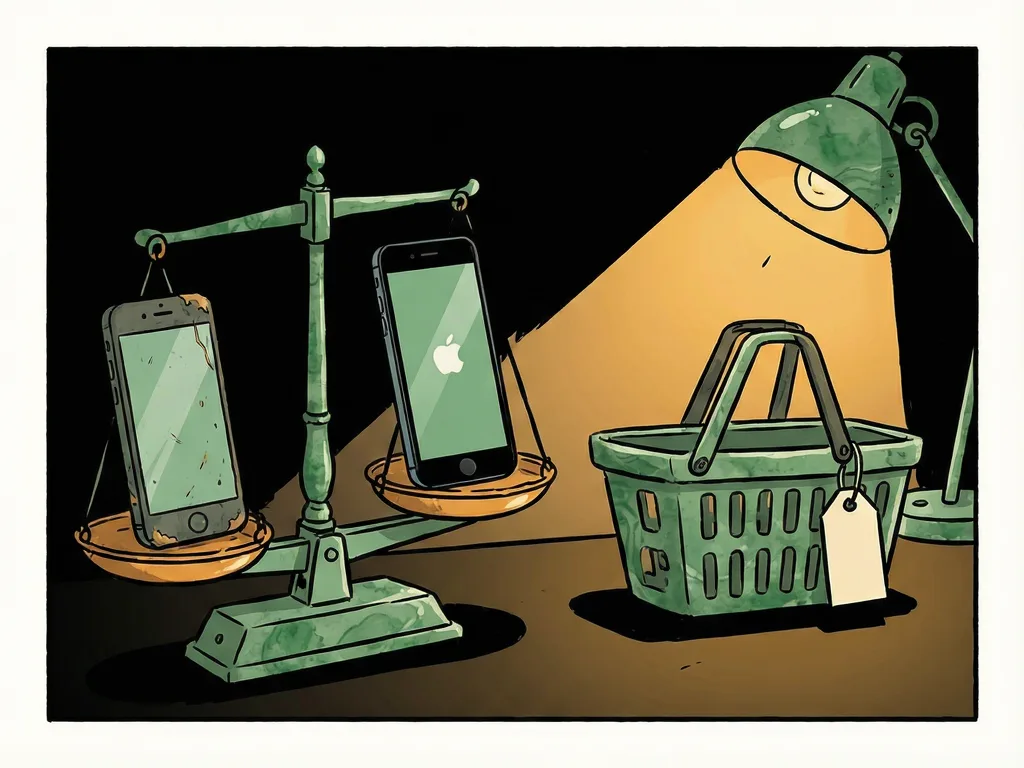
The core judgment is that a new phone is not automatically the better phone. If the goal is to spend less without giving up the features that matter most, last year's flagship — or even a flagship from the year before — may deliver almost the same experience at a much lower cost. The data points are unusually clear: the Motorola Razr 2026 costs $799 at Best Buy, while last year's Motorola Razr 2025 is $250 less at $549; the Samsung Galaxy Z Fold 7 is $1,299 at Amazon, while the Z Fold 8 Ultra is currently $1,749; and the Galaxy S25 Ultra can be purchased for $859, with a past low of $729, while an unlocked Galaxy S26 Ultra with no carrier obligations is on sale for $971.
Those price gaps are not random. They reveal how phone pricing works when a new model arrives: carriers and retailers lower the price to try and sell off inventory, and during Black Friday that strategy gets turned up to 11. The result is that older flagships become the most interesting value category in the sale.
Black Friday Rewards Buyers Who Ignore the Newest Shelf
The latest flagship phones are expensive. Even with discounts, buyers may still be paying several hundred dollars — if not more. Older phones do not have that issue to the same degree. A new model does not magically make the previous generation disappear; it simply creates room for inventory clearance.
The Motorola Razr example shows the pattern. The Motorola Razr 2026 at Best Buy costs $799, the full retail price. The Motorola Razr 2025 is $250 less at $549. That is not a tiny discount. It is a change in category: the older model moves from premium pricing into a much more approachable price band.
The foldable comparison is even starker. Amazon is selling the Samsung Galaxy Z Fold 7 for $1,299, while the Z Fold 8 Ultra is currently $1,749. A $450 difference between a current premium foldable and an older foldable is large enough to change the purchase decision for many buyers, especially when the older device still offers the core foldable experience.
The Galaxy S25 Ultra and Galaxy S26 Ultra comparison adds a third example. The Galaxy S25 Ultra can be purchased for $859, though it has gone as low as $729 in the past. The unlocked Galaxy S26 Ultra with no carrier obligations is on sale for $971. The gap is not enormous, but it is meaningful. If the extra money does not buy a clearly better daily experience, the older flagship becomes the rational choice.
The Hardware May Be Almost the Same, and That Is the Point
One of the strongest arguments for older flagships is that phone companies have been criticized for seemingly doing the bare minimum with each new generation. That criticism matters because customers realized it quickly: if the old one is basically the same as the new one, why does it matter which one you buy?
The Galaxy S26 Ultra and Galaxy S25 Ultra make the case. The S26 Ultra looks and feels almost identical to the S25 Ultra. The chipset is newer, there is a Privacy Display feature, and charging speed has been increased — with 60W wired and 25W wireless charging compared to 45W and 15W on the S25 Ultra. Everything else is pretty much the same.
That is the essential trade-off. The newer phone has incremental improvements, but the older phone retains the flagship platform: the same design direction, the same product class, and the same broad feature set. For many buyers, the difference is not enough to justify paying more. If you do not care about the few changes that have been made, then you can spend that extra money on something more important. Those savings could go toward some new accessories, or just your usual monthly expenses.
Benchmarks Show Real Gains, But Everyday Use May Not
Performance is where the analysis becomes more nuanced. A new chipset could make major differences to how a phone performs. That is true to an extent, but it is not as though we're seeing gargantuan leaps in performance every single year.
The Galaxy S26 Ultra and Galaxy S25 Ultra provide the numbers. In Geekbench, the Galaxy S26 Ultra scores 3,785 / 11,563, while the Galaxy S25 Ultra scores 3,031 / 9,829. In 3DMark Solar Bay Unlimited, the Galaxy S26 Ultra records 49.37 / 12,984, compared with 42.4 fps / 11,140 for the Galaxy S25 Ultra.
Those results show that the switch from a Snapdragon 8 Elite to the Snapdragon 8 Elite Gen 5 is noticeable. Benchmarking results show a rise in computing performance, especially in multi-core testing. The same is true for graphics performance, with an increase to the raw performance score and the average framerate.
But benchmark gains and daily gains are not the same thing. Looking at numbers can only tell you so much. Having used both phones, the difference isn't noticeable with everyday use. That is the key risk to the new-phone case: if the upgrade is visible in charts but invisible in ordinary tasks, the premium becomes harder to defend.
There are exceptions. If you're a fan of high-octane mobile gaming, or you tend to do a lot of performance-heavy tasks on your phone, then better performance may be needed. The battery result also matters: the S26 Ultra lasted an extra 103 minutes in the battery test, no doubt thanks to the extra energy efficiency of the newer hardware. That is a real advantage, but it is still not automatic proof that the extra price is warranted. Is that enough to warrant the extra price? Possibly not, especially if that money could be better spent elsewhere.
Software Support Has Changed the Older-Phone Equation
In the past, anyone buying an older phone had to contend with the fact the phone may run out of official software support before they were done with it. Not only does this mean you miss out on newly-released software features, loss of security updates meant your phone was more vulnerable to attacks and other security threats — not to mention the fact that you'll eventually stop being able to use your favorite apps.
That concern has weakened. Companies like Google and Samsung have pledged several years of software support on their devices — with up to seven years support on flagships. Likewise, Apple typically offers five to six years of iOS updates on all devices, and makes a point of releasing critical security updates years after other software support has dried up.
This is a major shift in the value of older flagships. A flagship from a year or two ago may still have many years of support ahead of it. That means the older phone is not merely cheaper; it may still be a long-term device.
There is another layer: many phone features are purely software-based. There have been instances where AI features on Samsung and Pixel phones started off as exclusive to the newest flagships, but made their way to older phones in a software update. That makes the older flagship even more interesting, because the gap between old and new can close after purchase.
The caveat is important. Extended software support isn't available on all phones, and there are a lot of brands that still offer the bare minimum of two Android updates and three years of security support. Mostly this issue affects budget brands with phones that are typically cheap enough that it makes more sense to buy the latest models — examples include Motorola G Power line and TCL.
So the rule is not "buy any old phone." The rule is: buy older flagships from brands with credible support commitments. That distinction turns a potentially risky purchase into a rational one.
Used and Refurbished Devices Add Another Layer of Value
Just because you're looking at older phones doesn't mean you should feel pressured into buying used or refurbished models. There are plenty of brand new devices available, but the older the device the less likely you'll be able to find one. That said, there are extra advantages to buying a used device instead.
For starters, used and refurbished phones are often significantly cheaper. Refurbished phones are often a little pricier than standard used phones, because their condition has been restored to the point that they're almost as good as new. Some of them even come with warranties, just to give you the extra piece of mind that things aren't likely to go wrong.
The environmental argument strengthens the case. Buying a pre-owned device also means that a single phone is getting a new lease on life, and that has a much lower environmental impact. Rather than buying a brand new phone, which involves mining, manufacturing, shipping and all those other industrial processes, you're saving an older phone from going through that same process in reverse. That's a nice bonus considering you're probably more interested in the lower price tag.
The Deal List Makes the Older-Phone Thesis Concrete
The available deals listed in the source material show how broad this opportunity is.
The first Apple e-series phone still has a lot of great qualities: a solid camera, good battery life, Apple Intelligence and the power of the A18 chipset.
The entry-level foldable comes with a large 6.9-inch foldable display, a cover display capable of running full Android apps, an assortment of AI features and compact design.
The iPhone 16 is the oldest phone Apple still sells, and it can be had for slightly less — so long as you're happy being locked to Walmart's Straight Talk MVNO. It's got good cameras and performance, as well as full access to Apple Intelligence.
There's no successor to the super slim phone yet, but its age means it's a little cheaper than other Galaxy phones. Plus, unlike the iPhone Air, this one actually has two cameras to work with.
The Galaxy S25 Ultra is very similar to the S26 Ultra, though it lacks the fast charging and Privacy Display. Still, you get to enjoy good performance, a bright and sharp display and long battery life, alongside the 200MP camera lens.
The iPhone Air is slim, lightweight and far more durable than it looks. Not to mention the fact it has all the benefits of owning an iPhone like good performance, camera quality and long software support.
The Galaxy Z Fold 8 Ultra is new, and it's expensive, but last year's model is a good $500 cheaper than the current price. It lacks the crease-free screen and larger battery, but it still offers an excellent viewing experience, battery life and camera performance.
That list is the practical version of the argument. The older devices are not merely "cheaper." In several cases, they are older versions of the same product line, with enough features intact that the price reduction becomes the main story.
The Real Question Is What You Would Do With the Savings
The strongest case for older flagships is not that they are perfect. It is that the gap between old and new has narrowed in ways that make price more decisive.
The Galaxy S25 Ultra and Galaxy S26 Ultra comparison is especially telling. The S26 Ultra has a newer chipset, a Privacy Display feature, and faster charging: 60W wired and 25W wireless versus 45W and 15W. It also lasts an extra 103 minutes in the battery test and scores higher in Geekbench and 3DMark Solar Bay Unlimited. Those are real improvements.
But the older phone still offers flagship design, flagship performance, and much of the software experience. If the buyer does not need the gaming performance, does not care about the charging speed, and does not need the Privacy Display, the extra cost may not buy a better phone — only a newer one.
The foldable market shows the same logic in a more extreme form. The Galaxy Z Fold 8 Ultra is current, but the Galaxy Z Fold 7 at $1,299 is dramatically less than the current $1,749 price. The older model may lack the newest refinements, but it still provides the core foldable experience at a lower entry price. For buyers whose main goal is to get into a foldable without paying the full premium, that discount may matter more than the newest hardware.
The Motorola Razr comparison is similar. The Razr 2025 at $549 is not just a discount; it is a different price point. It may be more attractive than many cheap phones, because it is still a flagship-class device that has not been compromised by price.
Uncertainty and Risk Remain, and They Should Not Be Ignored
The older-phone strategy has limits. The first is pricing volatility. The numbers cited are point-in-time: at the time of writing, the Motorola Razr 2026 costs $799, the Motorola Razr 2025 costs $549, the Galaxy Z Fold 7 costs $1,299, the Z Fold 8 Ultra costs $1,749, the Galaxy S25 Ultra costs $859 with a past low of $729, and the Galaxy S26 Ultra costs $971. Black Friday deals can change, and the best price may not last.
The second limit is software support. The argument is strongest for flagships from Google, Samsung, and Apple, where support commitments can extend for years. It is weaker for budget brands. The source specifically notes that many brands still offer only two Android updates and three years of security support, and that this issue mostly affects budget brands with phones that are cheap enough that buying the latest model may make more sense. Motorola G Power line and TCL are named as examples.
The third limit is performance sensitivity. If a buyer does high-octane mobile gaming or performance-heavy tasks, the newer chipset may matter. The Galaxy S26 Ultra's extra battery life and higher benchmark scores are not trivial. For that user, the older phone may still be good, but the new phone may be the better long-term choice.
The fourth limit is availability. Older devices are easier to find when they are recently released, but the older the device, the less likely you'll be able to find one in good condition, especially if you want a brand-new unit. That is why used and refurbished options become more relevant as models age.
Related Coverage Shows the Broader Black Friday Phone Landscape
The same source material points to additional Black Friday phone topics that reinforce the idea that this is not just a simple "buy the newest phone" season.
One related item says iPhone Duo gets facial unlock thanks to iOS 27.3 beta, but it's not full Face ID — here's everything you need to know. That is a reminder that software changes can alter the perceived value of a device after purchase.
Another related item says Forget AirTag and Pixel Tag — I've tested the Pebblebee Clip 5 and its new emergency dispatch service changes everything. That matters because phone buying is not only about the phone; accessories and ecosystem tools can shape the value of a purchase.
A third related item says Black Friday foldable phone deals are here — free iPhone Duo, $350 off Galaxy Z Fold 8 and more. That fits the central theme: foldables are a category where discounts and bundle offers can sharply change the value equation.
The material also promotes following Tom's Guide on Google News and adding it as a preferred source, which signals that the analysis is part of a broader ongoing deal and review cycle.
The Bottom Line: Buy the Phone, Not the Release Date
The argument for older flagships is not that new phones are bad. It is that Black Friday changes the relationship between price and value. The latest models are newer, and they have the latest hardware and software that phone companies offer. But the older flagship may be almost the same in the ways that matter to everyday use, while costing far less.
The strongest evidence comes from the specific comparisons. The Motorola Razr 2025 at $549 is $250 less than the Motorola Razr 2026 at $799. The Galaxy Z Fold 7 at $1,299 is dramatically cheaper than the Z Fold 8 Ultra at $1,749. The Galaxy S25 Ultra at $859 — with a past low of $729 — is less than the Galaxy S26 Ultra at $971, even though the two phones are very similar. The S26 Ultra has newer hardware, a Privacy Display feature, faster charging at 60W wired and 25W wireless versus 45W and 15W, higher Geekbench scores of 3,785 / 11,563 versus 3,031 / 9,829, stronger 3DMark Solar Bay Unlimited results of 49.37 / 12,984 versus 42.4 fps / 11,140, and 103 minutes more battery life. Those are real advantages, but they may not be worth the extra price for every buyer.
If you are not looking to spend a lot of money, the older flagship is not a compromise. It may be the smarter buy. The real truth is that you're not going to miss out on much when you buy last year's flagship, or even a flagship from the year before. For many shoppers, the best Black Friday phone is not the newest phone on the shelf. It is the flagship that has already been discounted, still supported, and still capable of delivering nearly the same experience.
Related Apps
 Microsoft Edge v125.0.2535.51May 23, 2024 / 143.43M
 Replika: My AI Friend Apk v11.23.2Apr 24, 2024 / 946.1Mb
 TVB Stuttgart APK v0.5.0Jul 22, 2024 / 112.81Mb
 Never Saint Game Apk v1.0Jul 31, 2024 / 632.10Mb
 CaTgirl: AI Chat and Training Game Apk v1.0Jul 31, 2024 / 632.10Mb
 Growth Thief Game APK v1.0Jul 31, 2024 / 209.54Mb
Recommend Apps


