How Grand Theft Auto 6 Was Developed at Rockstar North
Nov 21, 2026
Rob Nelson, current Rockstar North co-studio head and head of development, seems relaxed for a man in Rockstar North's bridge, essentially moments from steering what may well be the most anticipated entertainment product launch of all time into port after 13 long years. Yet the more revealing part of his account is his willingness to concede that not even he quite knows how a game as fundamentally huge and absolutely astonishing as GTA 6 has come together. Money and talent are only a part of the answer; the rest is perhaps a little more nebulous.
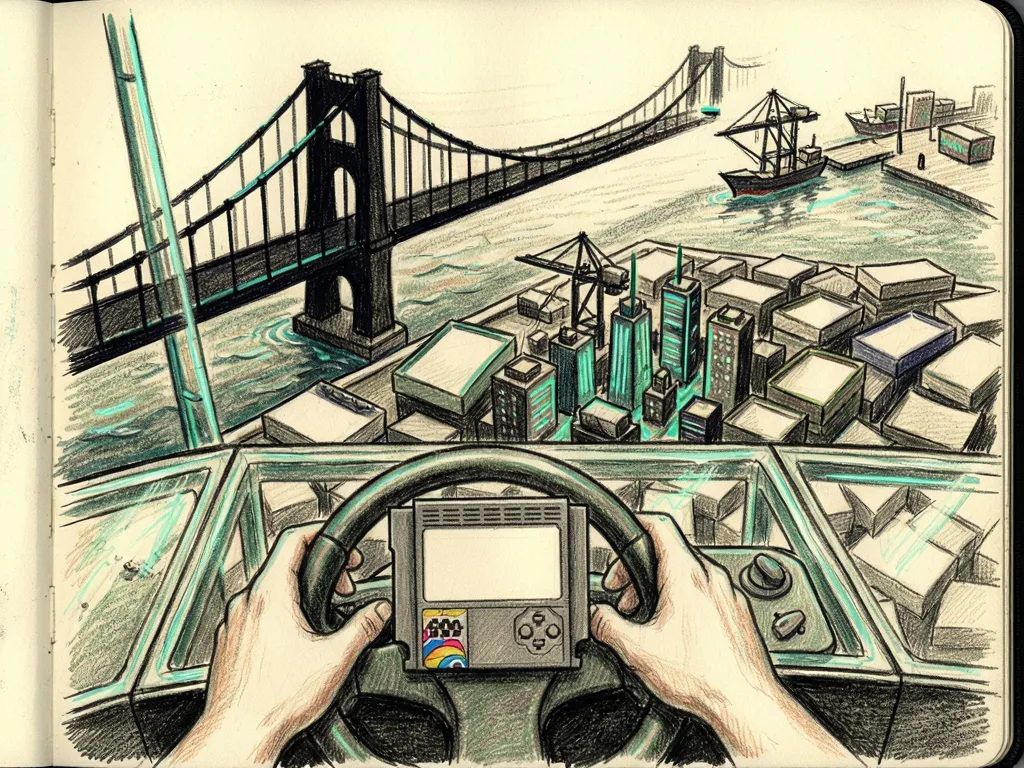
Nelson's core explanation is not technical but organizational. "I think it takes a lot of obstinance, really," he says. "Just a sort of stubborn persistence in pursuit of the same thing for a long time, and a team that's been together for a really long time. Now a really, really long time." He adds that he only knows his part of the work, alongside what co-studio head Aaron Garbutt does, what director of technology Phil Hooker does, and what the programming team does. The answer, in his telling, is that the game is built up in layers.
Why 13 years and a bigger team changed the kind of trust required
Nelson explains that Hooker sent an update through to the team very recently that showcased the progress of missions, areas, and features in the game over the last few years. It was, he says, shocking to see how far it's come. He also notes that a lot of people saw the game's earlier state in the hack that Rockstar had a few years ago, and that development teams can forget the doldrums they go through while clinging to little wins day by day or week by week. Sometimes those wins feel few and far between, especially when a project is still a few years out.
That long arc matters because GTA 6 required a different kind of trust than earlier Rockstar work. Nelson says it probably sounds like a cliché answer, but this team and this game needed that trust more than they had ever needed it. The reason is scale: the team is larger than ever, double the size it was on RDR 2, and more spread out than ever in terms of studios all over the world. Time zones and COVID also shaped the process.
He describes the feeling of sitting in week after week and asking, "Is this thing ever going to come together? Are we ever going to find it?" The structure that kept such a distributed team coherent, according to Nelson, was repetition rather than single moments of heroism. Because teams had been pursuing the same thing for a long time, each team generally knew what it wanted to do and wanted to evolve, and could just get on with it. Rockstar North used eight-week sprints: pull a bunch of stuff together, evaluate it, make a bunch of notes, go back, iterate, iterate, iterate.
Small wins and unsolicited flourishes show the team's real strength
One of the clearest examples of this approach is a unique animation solution that lets characters get out of cars in skinny gaps when the door cannot open all the way. Nelson lights up when discussing it. He says there are so many examples of this across the game, but this one is a great example of one where the team just does their thing.
The animation hit a build one day, and Nelson played it just like the reviewer played it. He says he was impressed: "Holy shit, look at this. It's amazing." He never asked for it. As far as he knows, none of the other heads of development asked for it either. The team did it, and the animation directors decided that they wanted to do it. Nelson calls it a great example of something the team did off their own back.
He describes this as the most exciting part of the work: so many talented and experienced people are working on it, and they care equally about their part, making every build exciting. Every time a new build arrives with new stuff hitting it, it gives the team energy to keep going. It can be new ads on the radio, the radio going live for the first time, new UI elements coming in to try, or little touches that make the team feel, "Okay, all right, we're just going to keep going." Those moments, he suggests, are what sustain the project.
But Nelson also concedes that this kind of autonomy must be managed. Without guardrails, he says, every team will go crazy and go on forever. There is a contract among the teams, including the leadership, to have checks and balances about where to push, how far to push, how hard to push, and how much resource something is worth. Everything is time and resource spent. Contrary to what people think, Nelson says, Rockstar does not have infinite money, time, or resource, so decisions have to be made.
The 30 frames per second decision exposes the trade-off
Those decisions became visible in the conversation about performance. Rockstar's confirmation that GTA 6 runs at 30 frames per second across all platforms including PS5 Pro became a popular talking point last week. Asked what would have to fundamentally change about GTA 6, and when, if the game had targeted 60 frames per second, Nelson's answer was simple: "Too much, too much."
He says it would not have been acceptable to anybody. When the technical team is asked about a higher frame-rate target, the reaction, in his telling, is essentially: "Have you seen it?" The short answer is that there would have been too many compromises that would have had to be made to do that.
The underlying point is that the frame rate had to be limited somewhere in order to achieve Rockstar's artistic vision. Nelson says the team is not ruling out things being different on future hardware, but GTA 6's sheer amount of visual fidelity, the complexity of its simulation, and the amount of systems and gameplay options it has would simply not be possible on current hardware at a higher frame rate.
How the game feels when players stop asking for a bigger spectacle
The reviewer's experience after playing GTA 6 for the last three weeks supports that framing: it is hard to imagine removing anything. Interestingly, Nelson appears to play GTA 6 in a way that closely matches the style of play the reviewer settled into during the review period, particularly in the way he prepares prior to open-world store and bank heists.
Nelson describes loving just going into a store and buying a six-pack, walking down the street, drinking them one at a time, getting progressively more belligerent until he is throwing the last two and talking to people. Then he calls Lucia and sees if she wants to hang out and sort of walk around. For him, the appeal is watching the world, the city, pass from day to night, seeing the population change, and seeing people out for a night out.
That, he suggests, is the feeling of the game: you can really feel like you are embodying your version of these characters in that world. The player can move from playing solo to being on a date and walking around holding hands, strolling down the beach, going into a nightclub and dancing together, or going robbing together.
As the reviewer discovered over the last few weeks, Nelson explains that the amount of preparation a player wants to do typically determines how successful the crime spree will be. He likes to get just all of it ready: get a big vehicle, a big truck that he has souped up that can hold six bags, and park it somewhere close by. Then he goes to steal a motorcycle that he does not own and parks it really close to where he is going to rob. He goes in and robs it, comes out, takes off on the motorcycle, stashes the bags in the truck, goes to hit some more, and loads the truck up with bags. Then the player can either send the partner to go fence it, or go fence it themselves.
What remains uncertain
The interview does not claim that one person's vision explains the entire outcome. Nelson says he only knows his part, and that the broader answer depends on many teams working in layers. It also does not promise that the 30 frames per second choice is a permanent technical law; future hardware could change what is possible. What is clear from the source is that GTA 6's scale came from long-term persistence, distributed trust, finite resources, and deliberate constraints.
The piece also references a GTA 6: Photo Mode Gallery. IGN's GTA 6 review is live now, and IGN also has a GTA 6 launch live blog so readers do not miss a thing.
About the reporting
Luke Reilly is an award-winning journalist with 23 years of media experience. He previously served as Editor of Official PlayStation Magazine - Australia and Australian 360, before joining IGN in 2011. You can find him on Bluesky @mrlukereilly to ask him things about stuff.
Related Apps
 Microsoft Edge v125.0.2535.51May 23, 2024 / 143.43M
 Replika: My AI Friend Apk v11.23.2Apr 24, 2024 / 946.1Mb
 Chapters: Interactive Stories Unlock the full version v6.5.9Jul 16, 2024 / 108.48Mb
 Italki: learn any language Apk v3.131.1-google_playJun 20, 2024 / 82.21M
 TVB Stuttgart APK v0.5.0Jul 22, 2024 / 112.81Mb
 Toffee for Android TV Apk v2.8.4Jul 15, 2024 / 21.62M
Recommend Apps


