After six months of comparing the Oura Ring 5, Apple Watch, and Garmin Index Sleep Monitor, we identified the best Black Friday purchase.
Nov 21, 2026
The clearest judgment is that these three wearables do not compete on one single axis. The Oura Ring 5 is the sleep-first option: it is designed around overnight comfort, in-depth sleep tracking, and a body clock feature intended to streamline a sleep schedule. The Apple Watch 12 is the all-in-one option for iPhone users: it adds sleep apnea detection, sleep stage data, and a gentle haptic alarm without a subscription, but its watch form can feel bulky in bed and its battery needs daily charging. The Garmin Index Sleep Monitor is the budget sleep-only option: it is under-$200, has a screen-free armband, long battery life, and no subscription, but Bluetooth connectivity problems can make tracking unreliable.
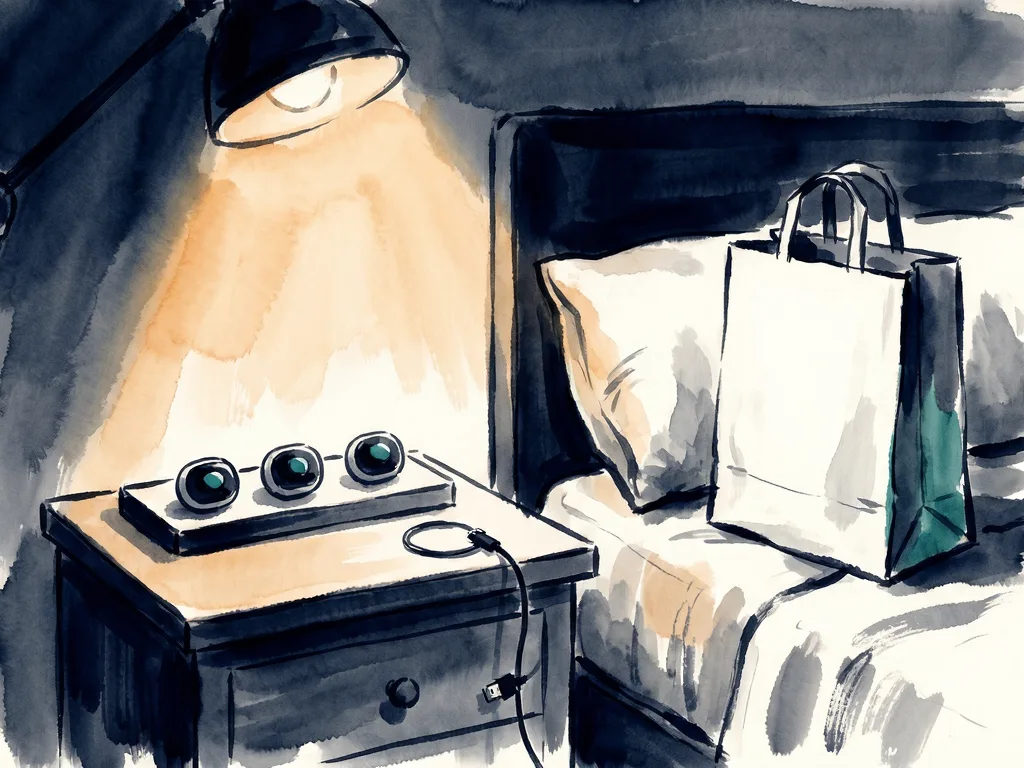
All three appear in a guide to this year's best sleep trackers, with the Oura Ring taking the top spot. That ranking matters because sleep tracking is not a simple feature. It depends on how often a user is willing to charge a device, how much a monthly fee changes the total cost, whether the wearer wants a screen, and how comfortable the tracker is through the night.
Price and total cost decide the real winner
At full list price, the Oura Ring 5 starts at $399 and goes up to $499, depending on the shade or finish. A silver Oura Ring 5 is $399, while a gold Oura Ring 5 is $499. During Black Friday, however, the Oura Ring 5 received its first ever price drop: $100 off, making it $299 (was $399) at Amazon. That is a 25% discount, and premium finishes such as gold are now $399 (was $499).
The older Oura Ring 4 is also discounted, now from $249.99 (was $349.99) at Amazon. The comparison between the Oura Ring 5 and Oura Ring 4 may be useful for readers deciding whether a downgrade saves money, but the newer ring carries extra ownership costs. A sizing kit is completely free direct from Oura, or $10 at Amazon. More importantly, the Oura Ring 5 needs a $5.99 or £5.99 monthly membership to use its sleep tracking, with the first month free.
The Apple Watch 12 is now $329.99 (was $399.99) at Amazon, and there are also plenty of cheaper Apple Watch deals on previous models. This is the first Black Friday sale opportunity for the latest Apple Watch, which was released just a few weeks ago. Prices start at $329 (was $399) for the smaller design, while the larger face is $379 (was $448). Apple does not require a subscription to access its sleep features.
The Garmin Index Sleep Monitor is the cheapest of the three at $169.99, also with no subscription. Previous deals have reduced it to $130.50 during Amazon Prime Day sales, and the source is still watching for another drop before Black Friday. In the buy-this section, the guide notes that the Garmin is never sold over $170 and can reliably be found on sale during holiday seasons.
The cost analysis therefore shifts the choice. If a reader values the lowest sticker price, Garmin wins. If a reader wants no monthly fee, Apple and Garmin win. If a reader accepts a recurring $5.99 or £5.99 charge for a more sleep-focused ring, Oura becomes competitive during Black Friday.
Comfort is a sleep-tracking feature, not a cosmetic detail
The Oura Ring 5 is described as the world's smallest smart ring, with a slim design and a lightweight barely-there feel. The reviewer, who has worn it for five months, says the ring never felt uncomfortable and never interfered with sleep. The sizing kit helps it fit like a glove, and the ring comes in sizes to fit most fingers.
The Apple Watch 12 comes in various models, with some slimmer than others, but all Apple Watches are watches. The reviewer finds any wristwatch uncomfortable to wear in bed, especially smartwatches with heavy screens and tight straps, because skin contact is needed for tracking accuracy. That said, comfort is personal, and someone who does not mind a bulkier wrist device may still sleep happily in the Apple Watch 12.
The Garmin Index Sleep Monitor is a screen-free armband. The lead tester for the Garmin Index Sleep Monitor review found it surprisingly comfortable and lightweight. The band is available in two sizes: small-medium and large-extra-large. Because it has no heavy screen, it is not weighed down by large displays.
This section matters because a tracker cannot improve sleep if it makes the wearer want to remove it. Oura's strength is that it is built to be forgotten. Apple's weakness is that it is built to be seen, and a screen on the wrist can be distracting or uncomfortable at night. Garmin's armband sits between those two approaches: it has no screen, but it is still worn on the body in a more visible position than a ring.
The three devices share core sleep data, but their depth differs
All three trackers report how long a user slept, how much time was spent in deep sleep, Rapid Eye Movement sleep, and core sleep, and how long night-time awakenings lasted. All three also provide sleep scores that measure overall sleep quality on a scale of 1 to 100.
The data appears in the Oura app, the Garmin Connect app, and the Apple Health app. For the screenless Oura Ring 5 and Garmin Index Sleep Monitor, the app is the only way to view sleep data. The Apple Watch can provide immediate feedback through the Vitals app.
Oura's sleep tracking is renowned for accuracy and unique features. The Oura Ring 5 is designed to be more accurate than the Oura Ring 4, with a build that improves sensor contact with skin and 12% more accuracy in overnight Heart Rate Variability monitoring. The reviewer describes Oura as one of the most dependable consumer sleep trackers on the market, especially good at knowing when a person is asleep versus awake. Studies show up to 96% accuracy when compared with clinical polysomnography.
Apple's sleep strengths are different. The Apple Watch includes sleep apnea detection, available on Apple Watch Series 10 and up, which analyzes breathing patterns to detect disturbances that might signal sleep apnea. It also offers easy-to-read sleep stage data and a gentle haptic alarm. However, the reviewer found that Apple Watch sleep scores were often much higher than Oura Ring scores, even when the reviewer was regularly getting under seven hours of sleep. When wearing the Oura Ring 5 and the Apple Watch Ultra at the same time, the reviewer felt the Oura data reflected how they felt in the morning more accurately than the Apple Watch data.
Garmin's sleep metrics are geared more toward recovery. The Garmin Index Sleep Monitor offers a readiness score, called the Body Battery score, which tells a user how prepared their body is to handle daily activities such as workouts based on sleep data. Eve Davies, the lead tester for the Garmin Index Sleep Monitor review, said the Garmin is more focused on overnight breathing rates, oxygen levels and respiration rates, and is essentially more nerdy and geared toward athletic recovery.
Oura also has sleep metrics that Apple and Garmin do not provide in this comparison. Its sleep latency metric is missing from the Apple Watch and the Garmin Index Sleep Monitor. Oura's unique circadian scoring uses sleep data over time to identify a sleep chronotype, helping a reader see how well a sleep routine aligns with their circadian rhythm.
Battery life changes how often the user has to deal with the tracker
The Oura Ring 5 is designed to provide six to nine days of battery life on a single charge, with a 9-day maximum depending on size. A full charge from zero to 100 is said to take up to 80 minutes, though the reviewer finds it charges faster. The reviewer also says they never got nine days, or even a full week, possibly because the reviewer wears a size 7 and smaller sizes have shorter battery life.
The Apple Watch requires daily charging. The latest 12th Generation Apple Watch has battery life that lasts no longer than 24 hours. This is the most significant practical difference: the Apple Watch can track sleep, but it also needs a daily charging routine.
The Garmin Index Sleep Monitor can last up to eight nights, depending on sleep duration. It also tends to be worn less than the Oura Ring 5 or Apple Watch. If a user strapped the Garmin band on all day, the battery life would drop.
The battery comparison favors Oura and Garmin for people who do not want to charge a device every day. Apple's advantage is that its screen provides immediate data, but the cost is daily charging. Oura's advantage is long battery life in a ring, but the uncertainty is that the claimed nine-day maximum may not match smaller ring sizes in daily use.
Which wearable is worth the money?
Buy the Oura Ring 5 if the priority is in-depth sleep tracking, comfort, and a screen-free ring that can be worn without much notice. The reviewer says it helped them go from six to seven hours of sleep a night over five months. It is also a reasonable choice for Android users, because setting up the Apple Watch requires an iPhone.
Choose the Apple Watch 12 if the priority is avoiding monthly fees, getting immediate feedback on a screen, and using one device for both sleep and fitness. The Apple Watch has sleep apnea detection, sleep stage data, and a gentle haptic alarm without a subscription. It is also more versatile than the other two, and there are plenty of models to suit different needs.
Choose the Garmin Index Sleep Monitor if the priority is the lowest price and a sleep-only wearable. At $169.99, with no subscription, it is the most affordable option. It is also useful for readers who want a tracker strictly for sleep rather than fitness and health, and it can last up to eight nights.
For readers upgrading more than one part of their sleep setup, the source also points to a guide to this year's best Black Friday mattress deals. That matters because a wearable can improve how sleep is measured, but it cannot alone fix an uncomfortable bed.
Related Apps
 Microsoft Edge v125.0.2535.51May 23, 2024 / 143.43M
 Replika: My AI Friend Apk v11.23.2Apr 24, 2024 / 946.1Mb
 Chapters: Interactive Stories Unlock the full version v6.5.9Jul 16, 2024 / 108.48Mb
 Toffee for Android TV Apk v2.8.4Jul 15, 2024 / 21.62M
 Italki: learn any language Apk v3.131.1-google_playJun 20, 2024 / 82.21M
 TVB Stuttgart APK v0.5.0Jul 22, 2024 / 112.81Mb
Recommend Apps


