I have watched every Hunger Games movie, and the best one is not what you think.
Nov 21, 2026
The Hunger Games: Sunrise on the Reaping ranks third because it makes Haymitch’s trauma the missing bridge of the franchise
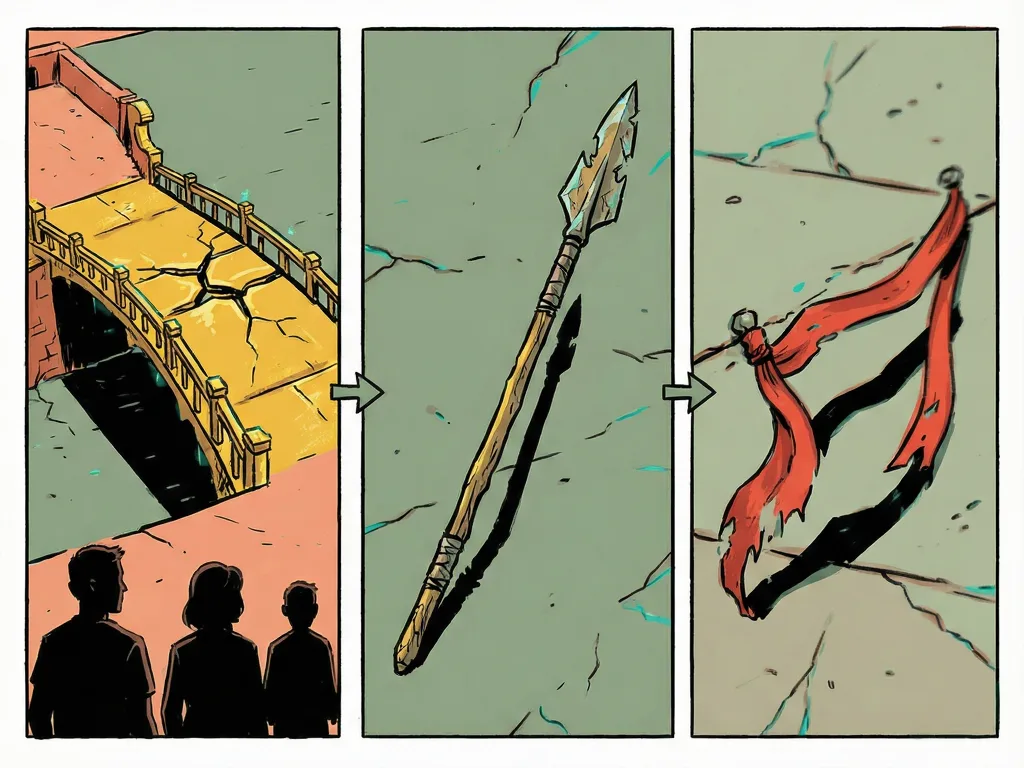
Core judgment: The ranking measures emotional repair against arena momentum
The Hunger Games: Sunrise on the Reaping ranks third in a Tom's Guide ordering of the franchise’s six main films. That placement is not a simple verdict on quality. It shows where the series still has strength: when it returns to the arena, its political machinery, its cast, and its moral stakes lock together. It also shows where the franchise has become more fragile: when it stretches a conclusion, splits a novel into two films, or asks audiences to care about characters whose future is already known.
Almost 15 years have passed since Jennifer Lawrence delivered the moment Katniss Everdeen volunteered as tribute and became an iconic action heroine. The Hunger Games carried the young adult genre to new heights and proved these movies could be legitimate blockbusters by every measure. After four flagship movies and one prequel, the franchise heads back to the past again in The Hunger Games: Sunrise on the Reaping. The prequel revisits Haymitch Abernathy, played by Joseph Zada, as a teenager competing in the 50th Hunger Games. The question the ranking answers is where that outing sits among the franchise’s best movies, and the answer reveals a pattern: the strongest entries are the ones that make the arena feel unavoidable.
The bottom of the ranking: Mockingjay – Part 2 shows the cost of finishing a franchise
The Hunger Games: Mockingjay – Part 2 ranks sixth. By the time the franchise reached its conclusion, the series had run out of gas. The film follows Katniss and her band of rebels after President Coin, played by Julianne Moore, tasks them with liberating District 2 before retaking the Capitol. It is the final push to overthrow President Snow, but as Katniss pursues revenge, she begins to question the rebellion’s true intentions.
The film is not necessarily a bad movie. The familiar group-on-one-last-mission trope builds to an exciting conclusion. The problem is that it is more concerned with reaching the finish line than saying anything new. That is the risk of a franchise ending under pressure: the machinery can still produce spectacle, but the story feels like a destination rather than a discovery. The source places it on Disney+ or Peacock, which makes its position in the ranking easy to revisit. For readers, the lesson is clear: a franchise can have a competent final chapter and still feel diminished if it prioritizes closure over invention.
The next entry: Mockingjay – Part 1 turns financial logic into narrative fatigue
The Hunger Games: Mockingjay – Part 1 ranks fifth. Splitting Mockingjay into two parts made financial sense, as the two movies combined to gross over $1.4 billion worldwide. Story-wise, however, a 390-page novel does not need more than four hours of screen time. Whenever a movie ends on an unresolved cliffhanger, more often than not, fans are going to reject it. The source says many fans, including the writer, rejected the ending of Mockingjay – Part 1.
The film begins after Katniss is rescued from the arena in Catching Fire and taken to the secret underground city of District 13. There, President Coin convinces Katniss to live up to her mockingjay reputation and become the face of the rebellion. Katniss eventually agrees because she wants to save Peeta, played by Josh Hutcherson, who is being held captive in the Capitol. It is the first movie in the franchise without the chaos of the arena, so the action is reduced.
Yet Mockingjay – Part 1 is also the best political thriller of the bunch. It emphasizes the anti-war and anti-fascist themes the best. The ranking therefore captures a contradiction: the film is weaker as a franchise installment because it lacks arena pressure, but stronger as a political chapter because it can sit with the machinery of propaganda, exile, and rebellion. It is also available on Disney+ or Peacock.
The prequel problem: Ballad of Songbirds & Snakes succeeds by refusing to soften Snow
The Hunger Games: The Ballad of Songbirds & Snakes ranks fourth. Coming after the success of the four Hunger Games movies, it had low odds of achieving success, though not as low as some of the tributes entering the arena. The film introduced a new cast and meant the absence of Lawrence, Hutcherson, Hemsworth, and the rest of the original ensemble. It is also a prequel set before the days of Katniss Everdeen. Most importantly, it is a story about a young President Snow, the same tyrannical dictator who would rule Panem for decades. The challenge for audiences is obvious: how are they supposed to sympathize with and grow attached to the future villain of the main trilogy?
The ranking argues that the best trick Ballad of Songbirds & Snakes pulls off is refusing sympathy for Snow. The viewer does not feel sorry for him. Instead, the film explores how trauma and grief can send a man down a path where embracing evil seems preferable to enduring hardship. In the film, a young Coriolanus “Coryo” Snow, played by Tom Blyth, mentors District 12’s Lucy Gray Baird, played by Rachel Zegler, in the 10th Hunger Games. It is the most grounded arena battle in the franchise, and the violence feels worse than ever before.
That placement matters for how readers should understand the prequel strategy. Ballad of Songbirds & Snakes works because it does not try to make its villain lovable. It works because it makes the audience watch the formation of a monster. The film had no business being this effective, and the ranking treats that as a compliment: it is a fascinating origin story that succeeds despite the franchise’s own expectations. It is available on Disney+ or Peacock.
The middle rank: Sunrise on the Reaping fills Haymitch’s missing history
The Hunger Games: Sunrise on the Reaping ranks third. The Hunger Games has long been known for having a deep bench of talented supporting actors. Woody Harrelson famously played Haymitch Abernathy, a former winner of the Games who mentored Katniss and Peeta in District 12. Haymitch was first introduced as a drunk and despondent former victor who wanted nothing to do with the Hunger Games. As the movies progressed, viewers learned that Haymitch was one of the rebellion’s allies and had been for a long time.
Why was Haymitch depressed all those years? Sunrise on the Reaping fills in the blanks by revisiting Haymitch’s win in the 50th Hunger Games, the second Quarter Quell. Joseph Zada stars as the 16-year-old Haymitch, who is much happier thanks to the love of his family and girlfriend, Lenora Dove Baird, played by Whitney Peak. After witnessing the Capitol’s hostility, Haymitch becomes the key figure in a plot to sabotage the Games once and for all.
The film is a tad too long, but it soars because of Zada, who injects so much life and passion into his portrayal of Haymitch. The ranking calls it a true movie-star-in-the-making performance and suggests that Marvel or DC may be calling Zada to put on a cape in a few years. That is not a promise of future casting; it is a sign that the performance has franchise-scale power.
This is why Sunrise on the Reaping matters. It does not merely add another arena. It repairs an emotional gap left by the original trilogy. Haymitch is one of the most important figures in Katniss’s story, but his despair was always larger than the main films could explain. The prequel gives his trauma a source, and it gives his later loyalty a cost. It ranks third because it is not as tightly built as the best original entries, but it changes how the audience understands the world. It is available now in theaters.
The foundation: The Hunger Games set the rules that later films had to beat
The Hunger Games ranks second. The movie that kicked off the young adult dystopian movie wave was 2012’s The Hunger Games. On the day of the reaping, Katniss volunteers to take her younger sister’s place in the 74th Hunger Games. Katniss and Peeta, her fellow District 12 tribute, enter the arena with little hope of surviving. As the Games progress, Katniss reluctantly becomes a symbol of hope, and her defiance lays the foundation for a rebellion.
The film was revolutionary for its time. It proved a young adult action franchise could be a profitable endeavor, grossing $695 million worldwide. Lawrence became a legitimate star and rose to A-list status, which she maintains in 2026. The movie depicts a battle to the death, but its messages about authoritarianism, exploitation, and inequality are very sophisticated for a teen drama. It also breaks an unwritten Hollywood rule: don’t kill kids. The source commends the film for having the guts to show Rue’s death.
This second-place placement is meaningful because The Hunger Games is the template the later films either improve upon or fail to extend. It establishes the central tension of the franchise: the arena is not just a death game. It is a broadcast system, a political weapon, and a moral test. The later entries become stronger when they keep that pressure intact. They become weaker when they move away from it. The film is available on Disney+ or Peacock.
The top rank: Catching Fire wins because it makes the arena smarter and more cruel
The Hunger Games: Catching Fire ranks first. The source frames this as the only possible answer for a real fan, and the reasoning is not sentimental. Catching Fire is the best action movie of the bunch, with the most innovative arena, a top-notch supporting cast, and riveting twists. After Katniss and Peeta defy the Capitol, President Snow makes the duo parade around the districts to eliminate civil unrest. When that does not work, Snow announces a twist for the 75th Hunger Games: all tributes will be former winners. In other words, it is back to the arena for Katniss and Peeta.
The film has by far the best in-arena sequences. The source highlights the opening of the Games as its favorite scene, where Katniss teams up with her new ally, Finnick, to save Peeta. Forget the young adult genre; Catching Fire is an excellent action movie that improves upon its predecessor in nearly every way.
That is the core of the ranking. Catching Fire works because it does not rely on nostalgia or prequel context. It raises the stakes inside the structure that made the franchise powerful. The arena is not repeated; it is escalated. The supporting cast is not decorative; it becomes part of the rebellion’s human cost. The political machinery is not explained in a separate film; it is felt through survival. It is available on Disney+ or Peacock.
What the ranking means for readers: the franchise’s best moments come from pressure, not padding
The ranking tells readers that The Hunger Games is strongest when the arena forces character, politics, and spectacle to move together. The Hunger Games and Catching Fire sit near the top because they make the game itself feel like a narrative engine. Ballad of Songbirds & Snakes succeeds as a prequel because it keeps the arena grounded and refuses to make its villain sympathetic. Sunrise on the Reaping earns its third place by giving Haymitch a history that the original films could only imply.
The lower entries reveal the opposite problem. Mockingjay – Part 1 is powerful as a political thriller but weaker because it removes the arena. Mockingjay – Part 2 is exciting as a finale but less satisfying because it feels more like finishing than discovering. The split of Mockingjay made financial sense, as the two movies combined to gross over $1.4 billion worldwide, but the 390-page novel did not need more than four hours of screen time. The franchise can grow, but it should not grow simply because it can.
For readers deciding where to start, the ranking offers a practical map. The original The Hunger Games is the essential entry point. Catching Fire is the strongest film in the series. Ballad of Songbirds & Snakes is a worthwhile prequel for viewers interested in the origin of Panem’s cruelty. Sunrise on the Reaping is important for anyone who wants to understand Haymitch, even if it is a tad too long. Mockingjay – Part 1 and Mockingjay – Part 2 are best approached with the expectation that the political stakes rise while the arena pressure falls.
Distribution note from the source
The original Tom's Guide article included Facebook, X, Reddit, and Email sharing labels, a Tom's Guide and Google News follow prompt, and an image credit to Future. It also noted that The Hunger Games: Mockingjay – Part 2, The Hunger Games: Mockingjay – Part 1, The Hunger Games: The Ballad of Songbirds & Snakes, The Hunger Games, and The Hunger Games: Catching Fire are available to watch on Disney+ or Peacock, while The Hunger Games: Sunrise on the Reaping is available now in theaters.
Related Apps
 FRAG v3.22.0Jun 03, 2024 / 197.8MB
 Microsoft Edge v125.0.2535.51May 23, 2024 / 143.43M
 Replika: My AI Friend Apk v11.23.2Apr 24, 2024 / 946.1Mb
 Chapters: Interactive Stories Unlock the full version v6.5.9Jul 16, 2024 / 108.48Mb
 Toffee for Android TV Apk v2.8.4Jul 15, 2024 / 21.62M
 Italki: learn any language Apk v3.131.1-google_playJun 20, 2024 / 82.21M
Recommend Apps


