A six-dollar beer in Grand Theft Auto 6 sent me into a downward spiral of crime and anxiety.
Nov 22, 2026
GTA 6 turns a $6 beer into a test of romance, anxiety and player choice
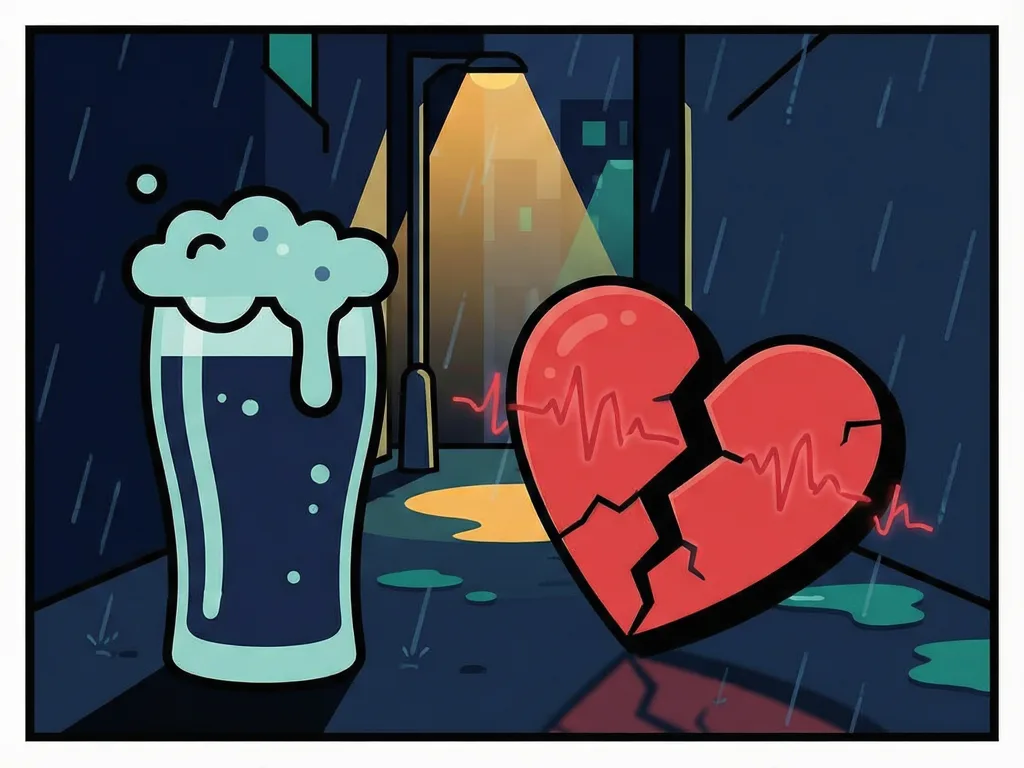
The central point of Rachel Weber’s account is not that GTA 6 contains romance. It is that Rockstar can make a $6 beer feel like a relationship audit. The piece, accompanied by GTA 6 launch screenshots, describes a player experience in which small actions, perceived tracking, and uncertainty turn ordinary gameplay into emotional risk.
The stated aim is relationship-maxxing Jason and Lucia. The goal is not money, cars, or building a criminal empire. The desire is to make the pair so disgustingly loved up that non-player characters violently vomit as they walk past being cute together, making everyone else in Vice City feel deeply inadequate. That setup matters because it gives the later $6 beer its weight. When the player’s objective is perfect couple, romance, devotion, and a relationship that makes everyone else in Vice City feel inadequate, a tiny failure is no longer a tiny failure.
The romance experiment begins with careful preparation
The anxiety starts before the beer. Early in the game, Jason is given the chance to prepare the house and complete simple objectives ahead of picking Lucia up from prison. The account describes doing all of it: fixing the steps, buying the necklace, getting the flowers, making sure the car was dent-free, having Jason take a shower and get a haircut, and dressing him in his best jeans and shirt. The stated logic is emotional rather than strategic. Jason should look presentable when he picks up the love of his life. The player is on best behavior. Nothing is going to stop him getting to his girl.
That determination becomes part of the problem. In Grand Theft Auto, the instinct is usually to take what is needed, move quickly, and exploit the open world. Here, the player avoids committing crimes on the way to the prison, obeys traffic laws, stops at red lights, and avoids trouble wherever possible. When a random non-player character tries to mug Jason, the player hands over cash rather than risk a fight. That detail is important because it establishes a cause-and-effect chain: being a law-abiding boyfriend creates the exact condition that later makes a $6 beer feel impossible.
The $6 beer exposes the hidden relationship ledger
After picking Lucia up from prison, Jason and Lucia head straight to the Rusty Anchor for a few drinks. The flowers are present. The necklace is present. The freshly showered boyfriend is present. The situation appears to be going brilliantly. Then Lucia wanders off for a moment and asks Jason to get her a drink.
That is the crisis. The player has no money. The decision to avoid crime has come back to bite. The cash was given to a mugger because the player was trying to be a good boyfriend, and now Jason cannot afford a beer that costs just $6. The account treats this as a possible relationship test. If Jason follows Lucia without her drink, will there be a broken heart icon? Will the game record the moment in an invisible ledger of romantic failures? Has the player already failed as a boyfriend, future husband, and potential co-parent because he cannot produce one alcoholic beverage?
The search for a solution escalates quickly. The player checks every bottle in the bar, hoping one can be grabbed and paid for. They are all empty. The entire building is searched for something that could be pawned, such as a trading card, or for random cash someone carelessly left lying around. Nothing works. The panic sets in.
Outside, the player searches nearby streets while trying to avoid a wanted rating. Being arrested while Lucia waits patiently for a drink would not help the relationship. The player looks for cars with trunks that can be broken into easily, finding sunglasses and hats. These are described as lovely but useless unless Lucia has suddenly developed a taste for drinking accessories. At this point, the player is seriously considering mugging someone for $6. The amount is framed as barely a crime, practically community service in the grand scheme of GTA. The player pulls out a gun and advances on a random non-player character walking down the sidewalk, about to threaten an innocent stranger with a deadly weapon in order to buy a girlfriend a beer.
Then the game cuts to a scene where Lucia says, “You forgot about me?”
The reaction is immediate and disproportionate. The player’s internal answer is the opposite of the accusation: the entire time was spent thinking about her. The player needed $6 for a beer. The player was prepared to commit armed robbery. The damage may not be mechanically confirmed, but the player believes it has already happened. The fear is that the game registered wandering off and abandoning Lucia, that she thinks Jason is inconsiderate, and that invisible points have been knocked off a perfect relationship score. The player also wonders whether the moment will return to haunt Lucia 30 hours later, when she remembers being left alone in a bar.
Restarting the checkpoint is chosen as the safest option.
Back to the prison, then to theft for love
The restart creates another problem. The checkpoint places Jason right outside the prison, which means the money problem remains unsolved. The player has travelled back in time but has not fixed the fundamental issue of being a broke boyfriend.
The solution comes from abandoning the earlier commitment to good behavior. Nearby, there is a parking lot. This time, the player goes rogue, breaking open trunks left and right, ignoring alarms, and grabbing whatever can be obtained. The same man who was carefully obeying traffic laws 20 minutes ago is now systematically robbing parked cars in broad daylight. Eventually, the player walks away with $30.
The account describes that as a fortune: five beers’ worth of romantic security. Jason gets Lucia her drink. The crisis is averted. The relationship is saved, probably.
Why uncertainty is the actual design mechanism
The strongest part of the piece is not the theft or the beer. It is the player’s inability to know whether the beer actually matters. The uncertainty is part of what makes the experience work. The player does not know whether failing to buy Lucia that drink would have affected the relationship. Maybe Lucia would not have cared. Maybe the game would not have registered the action at all. But the belief that it might matter was enough to completely change how the player played.
This reframes GTA 6 as something other than a criminal power fantasy. The player is not thinking about how much money can be made, how many cars can be stolen, or how much chaos can be caused. The player is thinking about whether Jason is being a good boyfriend. The player is worrying about whether Lucia feels appreciated. The player commits crimes not for personal gain, but in the service of being a thoughtful romantic partner.
That is ridiculous, but it is also fascinating. Rockstar has made the smallest interactions between these two characters matter enough that the player second-guesses everything. The possibility that an apparently insignificant action might have consequences for their relationship is enough to make even buying a beer feel like a high-stakes decision.
The account calls this relationship-pilled. The player has become so invested in Jason and Lucia’s romantic image that normal Grand Theft Auto priorities are replaced by devotion, presentation, and emotional maintenance. The player wants to be the perfect couple. The player wants romance. The player wants devotion. The player wants the sort of relationship that makes everyone else in Vice City feel deeply inadequate.
The contrast with traditional GTA play is essential. In a game where the player can also steal a sports car and drive it directly into the ocean, a $6 beer becomes more emotionally charged than a large criminal opportunity. That reversal is the core insight. The game does not need to prove that every tiny action is mechanically scored. It only needs to make the player believe it might be.
What the $6 beer reveals about relationship design
The piece suggests that Rockstar has found a way to make relationship tracking feel personal. The nuanced way GTA 6 tracks even the smallest actions turns mundane choices into emotional decisions. The beer is not just a beverage. It is evidence of care, attention, and provision. The haircut, shower, necklace, flowers, dent-free car, and traffic-law obedience are not just cosmetic details. They become a moral record.
This matters for players because it changes how they evaluate their own choices. In many games, moral systems are explicit: good choice, bad choice, dialogue tree, reputation bar. Here, the system is implied and anxiety-driven. The player restarts a checkpoint not because the game clearly punished them, but because they cannot tolerate the possibility that Lucia remembers being abandoned. The relationship is managed through fear of an invisible ledger.
That design creates both engagement and stress. The engagement comes from emotional investment. The player cares about Jason and Lucia beyond their utility as avatars. The stress comes from opacity. If the game tracks even the smallest actions, then the player may feel compelled to optimize romance, avoid every possible mistake, and undo moments that may not have mattered. The account shows a player who is constantly worrying that one wrong move will destroy a carefully cultivated romance.
The $6 beer also exposes an economic contradiction. The player is trying to be a perfect boyfriend in a world where being perfect requires money, and money is normally obtained through crime. The earlier law-abiding behavior was romantic only until it made the romantic gesture impossible. To buy the beer, the player must break the law. To preserve the relationship, the player must become the thing the relationship was supposed to rise above.
That contradiction is what makes the moment funny and revealing. It turns GTA’s criminal logic into a romantic comedy of errors. The player is not robbing cars to build a criminal empire. The player is robbing cars because Lucia asked for a drink and Jason is supposed to provide it. The crime is not framed as ambition. It is framed as care.
The risk is that the system can become too punishing
The piece is not only praise. It also identifies a possible danger. If the player believes every small action may affect the relationship, the experience can turn into paranoia. The account describes being made into a paranoid lunatic by the game’s nuance. The player is not merely enjoying Jason and Lucia’s romance. The player is afraid of failing at it.
That fear produces save-scumming behavior. The player restarts the checkpoint after the “You forgot about me?” cutscene, even though the damage may only be imagined. The restart then creates a new problem because it returns the player to the prison outside without money. The game’s systems may not be punishing the player directly. The player’s own belief in the system is doing the work.
This is a subtle form of design power. The game does not need to display a relationship score. The player creates one. The game does not need to show a broken heart icon. The player assumes it may exist. The game does not need to confirm that Lucia will remember the bar moment 30 hours later. The player already fears that she will.
The uncertainty can be compelling, but it can also be exhausting. A player trying to relationship-max Jason and Lucia may feel that every decision is being watched, recorded, and remembered. The emotional stakes become so high that a $6 beer feels like a referendum on whether Jason is worthy of being a boyfriend, future husband, and potential co-parent.
What the $6 beer does not prove
It is important to separate the player’s experience from the game’s confirmed mechanics. The account does not state that GTA 6 has a precise invisible relationship score, or that failing to buy the beer would have produced a specific penalty. The player does not know whether the game would have registered the failure. The possibility is enough to change behavior, but it is not proof of a full system.
That limitation is part of the article’s value. It shows how modern games can use suggestion, nuance, and emotional framing to produce complex player behavior. The player is not reacting to a visible meter. The player is reacting to the feeling that the game may be watching. The uncertainty is not a flaw in the account. It is the mechanism.
Still, the piece does not claim to know the final design consequences. It only claims that the player’s priorities changed. The player stopped thinking about criminal empire, money, and cars. The player started thinking about devotion, presentation, and whether Lucia felt appreciated. That is a meaningful outcome even if the underlying system remains partially hidden.
Why this may matter for later GTA 6 choices
If a $6 beer can already produce this much emotional compromise, the account suggests that later, larger choices may be even harder to navigate. The writer dreads what will happen when Rockstar inevitably throws huge, emotionally devastating choices at Jason and Lucia later in the narrative. At that point, choosing between love and betrayal might actually be easier than figuring out how to pay for a round of drinks.
That observation is revealing. In a crime game, betrayal is usually the expected high-stakes choice. But the piece suggests that mundane resource management can become the real pressure point. The player is not afraid of choosing a dramatic narrative branch. The player is afraid of failing to provide a small gesture at the right moment.
This reframes what emotional consequence can mean in an open-world game. It is not only about life, death, loyalty, or betrayal. It can also be about whether Jason remembers to buy Lucia a beer, whether he avoids crime long enough to be presentable, and whether he can preserve the image of being the perfect boyfriend without becoming a criminal again.
The account ends with the idea that romance options in games are never going to feel quite the same again. That is not because GTA 6 has invented romance. It is because the piece shows how romance can be embedded into the smallest mechanical pressures: money, timing, wanted levels, checkpoints, NPC encounters, and cutscene triggers. The relationship is not only spoken. It is performed through the player’s choices.
Rockstar is described as making the player commit armed robbery rather than disappoint a girlfriend, and somehow making that feel romantic. The language is joking, but the design point is serious. When a game can make a $6 beer feel like a test of devotion, it has changed the emotional texture of the genre.
The writer’s perspective
The account comes from Rachel Weber, Head of Editorial Development at IGN and an elder millennial. She has been a professional nerd since 2006, when she got her start on Official PlayStation Magazine in the UK, and has since worked for GamesIndustry.Biz, Rolling Stone and GamesRadar. She loves horror, horror movies, horror games, Red Dead Redemption 2, and her Love and Deepspace boyfriends.
That background frames the piece as a relationship-focused gaming analysis rather than a conventional open-world review. The writer is not measuring GTA 6 by money-making efficiency, car theft, or criminal empire progress. The writer is measuring it by whether Jason and Lucia become the perfect couple. The $6 beer becomes the test case for that larger question.
The final judgment is not that GTA 6 is only about romance. It is that Rockstar has found a way to make romance intrude on the player’s criminal instincts. The player does not merely want Jason and Lucia to survive Vice City. The player wants them to be loved up, adored, and emotionally flawless. The $6 beer is the small failure that threatens that fantasy. The $30 stolen from car trunks is the improvised repair. The uncertainty afterward is what makes the moment meaningful.
Related Apps
 Microsoft Edge v125.0.2535.51May 23, 2024 / 143.43M
 Replika: My AI Friend Apk v11.23.2Apr 24, 2024 / 946.1Mb
 Chapters: Interactive Stories Unlock the full version v6.5.9Jul 16, 2024 / 108.48Mb
 Toffee for Android TV Apk v2.8.4Jul 15, 2024 / 21.62M
 Italki: learn any language Apk v3.131.1-google_playJun 20, 2024 / 82.21M
 TVB Stuttgart APK v0.5.0Jul 22, 2024 / 112.81Mb
Recommend Apps


