China publicly revealed the GJ-11 stealth unmanned aerial vehicle operated by an elite team of self-trained female drone pilots, noting its close resemblance to Northrop Grumman's now-defunct X-47B unmanned combat aerial vehicle.
Nov 24, 2026
China's GJ-11 Stealth Combat Drone Footage Shows Two Weapons Bays and 1,000 to 2,000 Pound Munitions Capacity
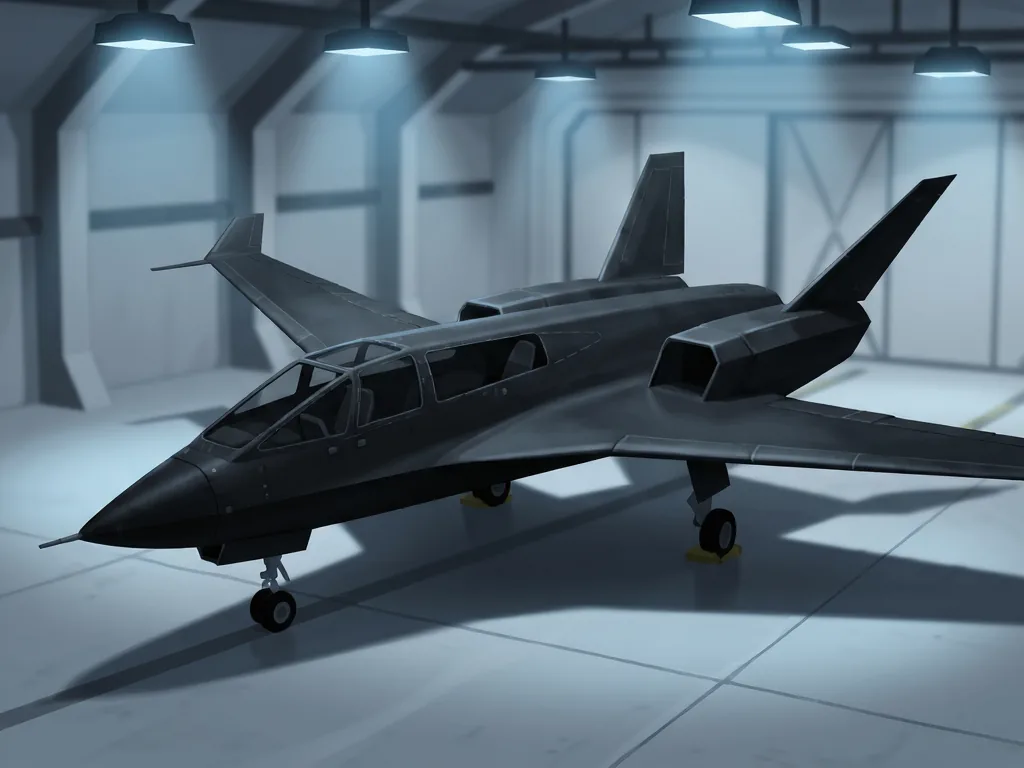
The new Chinese television footage of the GJ-11 stealth combat drone should be read as a confirmation of design intent, not as a full disclosure of capability. The core judgment is that Beijing is presenting the aircraft as an internally armed stealth drone for airstrikes and suppression of enemy air defenses, while leaving key questions about sensors, data links, and autonomy unresolved.
What the new material reveals
The broadcast disclosed structural and operational details that had not been visible before. The Chinese military describes the stealth combat drone as intended for airstrikes and suppression of enemy air defenses, among other planned missions. The material also exposed the drone's weapons bays, landing gear, nose sensors, and exhaust layout.
The aircraft has two internal weapons compartments beneath the fuselage, each covered by independently operated doors with serrated edges. The precise dimensions remain unknown, but the visible footage suggests the spaces may fit munitions weighing approximately 1,000 to 2,000 pounds. State television in China said the bays can hold varied air-to-ground and surface-attack munitions.
Other newly released sequences showed the landing gear retracting after takeoff, revealing a substantial arrangement with a twin-wheel nose assembly. A trapezoidal structure beneath the nose appeared to house electro-optical and infrared sensors for observation and targeting tasks. Similar installations appear on China's J-20 and J-35 fighters, although the actual capabilities and configuration of the GJ-11 equipment remain undisclosed.
At the rear, the footage showed a flattened exhaust outlet built into the upper fuselage, with the engine intake located above the main airframe. These features are intended to reduce radar and infrared signatures, complementing the tailless flying-wing configuration and the internally carried weapons.
Why internal carriage matters
The most operationally significant point is that the GJ-11 appears to carry weapons inside the aircraft rather than externally. Internal carriage allows it to transport munitions without external mounting equipment, which could compromise aerodynamic performance and increase radar detectability.
That design choice fits the stated mission set. Suppression of enemy air defenses missions require aircraft to locate, disrupt, or destroy hostile radar installations and missile systems protecting defended airspace. In that context, the GJ-11's stealth configuration and internal weapons compartments could allow it to approach these defenses while carrying weapons for precision attacks.
The footage still does not close the capability picture. It does not explain how targeting information moves between participating aircraft or establish the GJ-11's available autonomous capabilities. Those gaps matter because the described missions depend on sensing, coordination, and decision-making, not only on carrying munitions.
Teaming with crewed fighters
The broadcast also showed mission planning involving GJ-11 aircraft operating alongside J-16 multirole fighters and J-20 fifth-generation stealth aircraft. These arrangements suggest that China intends to employ the uncrewed platform alongside crewed aircraft for reconnaissance, weapons delivery and other combat responsibilities.
This is where the new footage has incremental value. A drone that appears with crewed fighters in mission planning is not being framed as an isolated platform. It is being framed as part of a mixed force. Yet the video stops short of explaining how that mix would work in practice. It shows aircraft in a planning context, but not the technical chain that would connect the GJ-11's observations to weapons employment or to information shared with the J-16 and J-20.
Program path and reported sightings
The aircraft's development can be traced back to the experimental Sharp Sword demonstrator before the GJ-11 appeared publicly during China's October 2019 military parade. Satellite imagery later recorded repeated testing at Malan in Xinjiang, while three examples reportedly appeared at Shigatse in Tibet between August and September 2025.
These dates and locations place the footage within a longer sequence rather than treating it as a standalone reveal. The October 2019 parade introduced the aircraft to public view, the testing at Malan shows a repeated test trail, and the reported appearance of three examples at Shigatse between August and September 2025 indicates a small-scale presence that may be operationally significant. At the same time, the source does not describe what those sightings mean for deployment, readiness, or unit assignment.
The X-47B comparison and its limits
The GJ-11 shares design traits with Northrop Grumman's X-47B, including the flying-wing shape, stealth design and internal weapons compartments. The comparison is useful for understanding the GJ-11's design language, but it is limited. The American aircraft never entered active military service or operational combat, and the Chinese drone's mission planning with J-16 and J-20 aircraft points to a different operational setting.
What remains uncertain
The main uncertainties are capability, autonomy, and integration. The footage suggests the GJ-11 can carry 1,000 to 2,000 pound munitions internally, but it does not specify weapon types beyond air-to-ground and surface-attack munitions. It reveals nose sensors that resemble those on J-20 and J-35 fighters, but it does not disclose their capabilities or configuration. It shows stealth-oriented design features, but it does not explain how targeting information moves between participating aircraft or establish the GJ-11's available autonomous capabilities.
For readers, the takeaway is narrow but concrete: the new footage confirms structural details that align the GJ-11 with a stealth strike and suppression of enemy air defenses role, and it shows the drone in a force context alongside J-16 and J-20 aircraft. The remaining questions are not cosmetic. They concern how the GJ-11 finds targets, how it shares data, how much it can operate independently, and how it fits into actual operations.