Four cool Blu-ray features that everyone forgot.
Nov 25, 2026
BD-Live in 2008 and 3D Blu-ray in 2016 Show Why Physical Media Still Matters
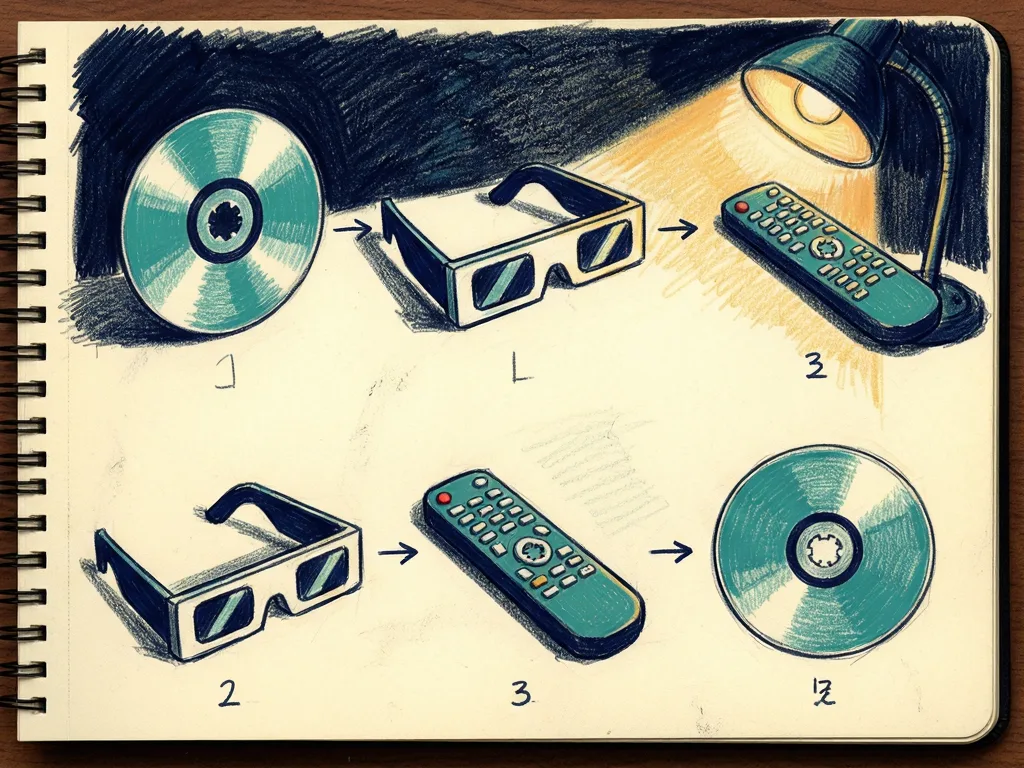
The core judgment is simple: in the streaming age, people may not buy discs and may not even remember what it was like, but a Blu-ray was almost never just a movie. It was a packaged product. Beyond the main film, it carried numerous features that formed part and parcel of the Blu-ray format, including several that today’s viewers might never have heard of.
That distinction matters now because streaming has changed the relationship between audience and film. With a disc, the buyer received a self-contained object with built-in extras. With a streaming service, the viewer receives access to a library. The old Blu-ray era shows how extra content, alternate cuts, picture-in-picture commentary, online features, and true 3D could make a movie release feel like an event rather than a simple playback file.
Multiple Cuts Could Live on One Disc
One of the most practical Blu-ray features was the ability for one disc to assemble several different cuts of a movie. This was not a brand-new idea. It was a feature inherited from DVDs, but it was less common there because of the lower capacity of DVD media.
The logic was work smarter, not harder. If a film had multiple cuts, they could be stored on a single Blu-ray, and only the differences between them took up extra space. If a viewer selected the director’s cut, the Blu-ray player could simply jump to the track containing alternative footage and then jump back when the two cuts aligned again.
That design reveals something important about physical media: the disc had to justify its price. A studio selling a Blu-ray could not rely on a subscription renewal to keep attention. It had to pack value into the object. The result was a format that treated the movie as a modular experience, with alternate versions available without forcing buyers to purchase multiple discs for different edits.
BD-Live in 2008 Connected Discs to the Internet
BD-Live connects you to internet features, and BD Live might be dead, but it was cool. If a Blu-ray disc you bought had the BD-Live logo somewhere on it, that meant you could use it to connect to exclusive content on the internet. The feature was added to the Blu-ray profile in 2008 and allowed for all sorts of possibilities.
Some of those possibilities were familiar by the standards of extra content: online games and quizzes, or additional downloadable content such as behind-the-scenes footage. But the most interesting use was chat functionality. Some studios even arranged scheduled chats where fans could speak to the movie director, actors, and other people involved with the movie. The Blu-ray was your ticket to get in the door. Obviously, these were one-off events, but it was a neat use of the online functionality in the format.
Disney made good use of it, but the later status of the feature is the warning. All you can read about it now is that the servers have been turned off. There is a clear irony here: the last great physical format also warned us about paying for things that live on a server and can be switched off. A disc could still be owned, but the BD-Live experience depended on remote infrastructure. Once that infrastructure went away, part of the product’s value disappeared.
BonusView Put a Second Video on Top of the Movie
Blu-ray could play a second video on top of the movie, and that feature had a great boon if you wanted to see the real Snyder Cut. A feature called BonusView is part of the Blu-ray video standard, and it allows for a picture-in-picture video to play on top of the main feature. Different studios had different names for this, and used it in creative ways.
A key example is the Maximum Movie Mode found in the Director’s Cut of Watchmen. When activated, Zack Snyder would walk onto the screen during the movie and talk to you. The source text also notes that if you thought you had seen the real Snyder Cut of a movie, you had not unless you had sat through it. One redditor managed to upload a clip of this, if you want to see The Zack in all his glory.
This feature shows how Blu-ray could turn a film into a layered viewing experience. It was not merely watching a movie with deleted scenes in a menu. The commentary could be woven into playback itself, creating a second visual track that accompanied the main feature. The source also credits an image of Rorschach in Watchmen 2009 to Warner Bros. Pictures.
True 3D Blu-ray Had Real Depth
Blu-ray movies could be in true 3D, and physical media had real depth. The author notes that this point may be cheating just a little, because the main reason people forgot that 3D movies at home were a thing is that no one has a TV you can watch 3D content on anymore. The last new 3D OLED TV model came out in 2016, which is a full decade before the original article was written. Since it is an OLED, the original article suggests they are probably all either dead or close to it by now.
3D Blu-ray is a separate format, but when you buy one it usually includes the 2D version on a separate disc. This is true 3D, not the anaglyph 3D some DVD movies were released in. There are two separate frames for each eye packed into a 3D Blu-ray.
You may be shocked to know that 3D Blu-rays are still being released. All three Avatar movies are available on disc in the 3D format. Though these days home 3D projectors and VR headsets are how you will access this content. At least Disney has brought 3D movies to its VR app, so all is not lost.
The 3D Blu-ray story is complicated. It was not a failed feature in a vacuum. It depended on compatible displays, and the display market moved away from home 3D. That uncertainty is important: physical media can preserve a format, but it cannot preserve the ecosystem needed to enjoy it. A disc can survive for decades. A TV can be replaced, discontinued, or abandoned.
Streaming Has a Lot to Learn From Physical Media
The source article frames the broader argument as a revelation: there are now several generations of people who have never put a DVD or Blu-ray into a player to watch it. Their only experience of home movies is whatever streaming services provide. The author calls this a little sad, because streaming services are incentivized to do the bare minimum for you not to cancel your subscription. Whereas with a Blu-ray, the studio has to pack as much value onto that disc as possible to convince you to pay for it.
That incentive structure explains why streaming services have such slim pickings when it comes to quality of life features or extra content. A subscription service is designed to keep you in the library, not necessarily to deepen your relationship with one film. A disc is sold once, and the buyer expects a complete package. That difference shaped what extras mattered.
Now that some people are turning back to physical media, we are seeing some glimmer of that coming to streaming as well. But by and large, the actual experience of watching a movie and immersing yourself in it through extra content is vastly superior on disc. It is an open question whether streaming providers even want to match what we used to have.
What Readers Should Take From BD-Live and 3D Blu-ray
For readers, the lesson is not simply nostalgia. The Blu-ray era shows that extra features were not decorative; they were economic. A studio selling a disc had to make the object feel worth the purchase. Multiple cuts could be stored efficiently. BD-Live could connect a disc to online games, quizzes, downloadable content, and scheduled chats with people involved in the movie. BonusView could layer commentary onto playback. True 3D could create a separate viewing format with two frames for each eye.
But the same features also expose risk. BD-Live depended on servers that could be turned off. 3D Blu-ray depended on displays that could disappear from the market. The disc survived, but the experience around it could fade. That is the tension in physical media today: it offers permanence for the content, but not always permanence for the interactive or platform-dependent features that once made it feel special.
The source material credits images to Patrick Campanale and How-To Geek, and the larger argument remains pointed: streaming has a lot to learn from physical media. The question is whether streaming services will learn it at all.