Grand Theft Auto 6 developer says Rockstar designed the wanted system so players feel the seriousness of their actions, with competent pursuit behaviours, and notes that sometimes unfit cop types are easy to escape from and may give up while chasing playe
Nov 25, 2026
The core claim from Rockstar is that Grand Theft Auto 6’s wanted system is not simply a harder police challenge. It is a calibrated escalation system: lower star levels are easier and more forgiving, while higher star levels are meant to make players “feel the seriousness of your actions.” Vice president of technology David Hynd made the comments to TechRadar Gaming after questions were sent directly to Rockstar. The company frames the law enforcement and crime system as a vastly improved, reactive wanted system compared to GTA 5.
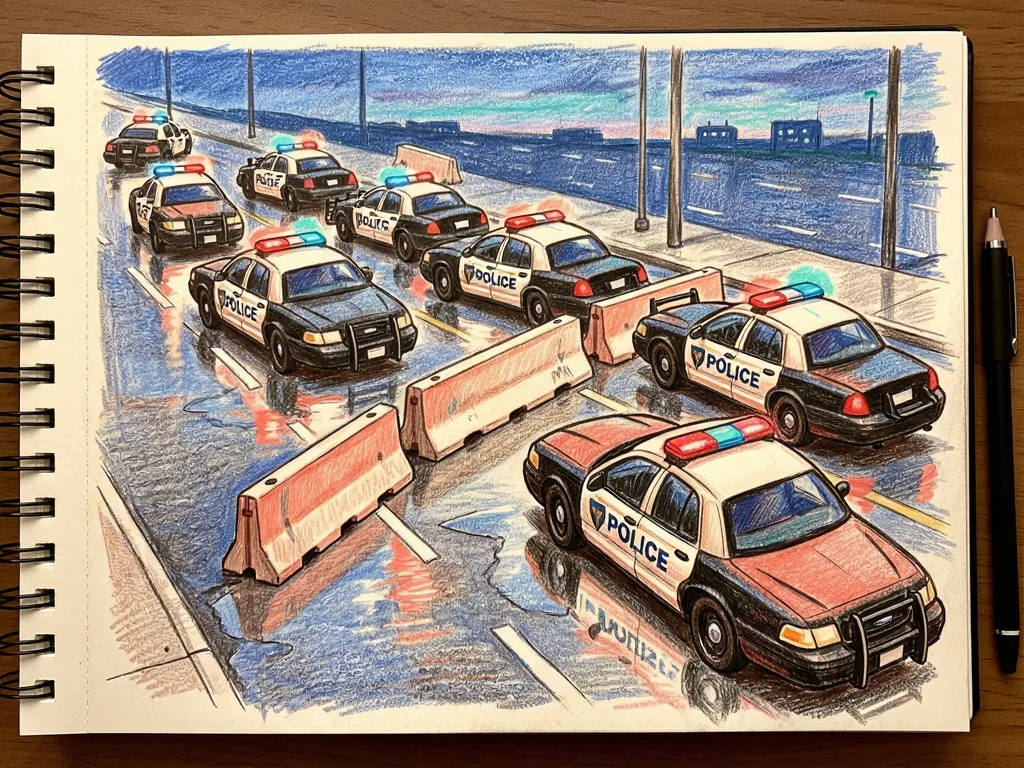
Rockstar is selling a reactive wanted system, not just more police units
The most important change is described as reactivity. The system is supposed to respond differently as a player’s risk rises. Hynd says the wanted system was designed to make players “feel the seriousness of your actions.” That phrase is the center of Rockstar’s argument: the wanted level should read as a consequence, not just a number.
The comparison to GTA 5 matters because it sets the baseline. Grand Theft Auto 6 will feature a “vastly improved, reactive wanted system compared to GTA 5.” The original reporting also says the system is intended to build “the most authentic wanted system.” Hynd says “competent pursuit behaviours” were “crucial” to that goal.
The development story is about iteration and balance
Rockstar’s own explanation is that the wanted system went through “lots and lots of iteration.” Hynd says “there were many times throughout development where the cops were too easy or too hard.” That admission gives readers a useful way to understand the design: the problem was not only whether police should be difficult, but whether difficulty would feel fair, believable, and fun.
Hynd adds, “We had to figure out which levers to pull to balance things out. And so we added a crazy amount of levers for the team to play with!” This is the clearest technical signal in the reporting. The solution was not a single setting, such as “police aggression,” but a broad set of adjustable behaviours and dispatch rules.
Lower star levels are easier, but they still carry risk
At lower star levels, Rockstar wanted the cops to feel “slightly different, but definitely easier.” That choice gives the team room to make police behaviour more realistic without turning every early offence into a chase. Hynd says, “At times, we use unfit cop types that are easy to get away from, who might give up when chasing you.”
This is where the arrest/surrender systems appear. Rockstar introduced those systems at lower star levels, but the team still wanted players to feel the heat if their actions get riskier. The design goal is therefore not to erase punishment at low levels. It is to make low-level consequences feel varied: a player may escape, be arrested, or surrender, depending on behaviour and response.
Higher star levels are meant to feel earned and dangerous
The higher side of the system is where Rockstar’s language becomes more severe. Hynd says, “On the opposite side of the fence, we wanted you to feel the seriousness of your actions at higher wanted levels as you need to commit some serious crimes to get your star level that high.”
That sentence links escalation to player choice. The wanted level is not presented as random punishment. It is described as the result of “some serious crimes.” Rockstar wants the police response to match that severity.
To do that, the developer focused on “competent pursuit behaviours.” Hynd says this meant that “cops had to be able to keep up in busy streets and drive similarly to the player,” including driving against traffic or off-road. This is the most concrete part of the wanted-system description: police are not meant to move in predictable loops; they are meant to mirror and pressure the player’s own route choices.
The pursuit suite includes ramming, PIT manoeuvres, roadblocks, and tyre shots
Once the team had a set of behaviours it considered effective, Rockstar could choose from them to shape each encounter. Hynd says, “Once we had a suite of behaviours, we were happy with (ramming, PIT manoeuvres, boxing in, blocking in front, shooting out tyres, etc.), we were able to adapt and choose the best ones to orchestrate the kind of experience we wanted players to have.”
The word “orchestrate” is important. It suggests that Rockstar is not only asking whether a cop car can chase a player. It is asking how a group of units can work together to create a readable sequence: a roadblock here, a blocking car there, a PIT manoeuvre when appropriate, and tyre shots as a final escalation.
Hynd also gives more detail about the controls the team can use: “We can decide how many units to dispatch, where to place roadblocks, and how aggressive cops should be at stopping you.” That is the practical form of the “crazy amount of levers” idea. Dispatch size, roadblock placement, and aggression are separate design tools that can be combined.
What this means for players before launch
Grand Theft Auto 6 finally launches tomorrow for PS5, Xbox Series X, and Xbox Series S. The reporting says that if players have pre-ordered, they still have enough time to pre-load. For readers who have not done that yet, the source points to a guide to the best places to buy GTA 6.
The article also includes a short console guide: “Read our full guide to the best gaming consoles,” with four recommendations: 1. Best overall: PlayStation 5 Slim, 2. Best budget: Xbox Series S, 3. Best handheld: Nintendo Switch 2, 4. Most powerful: PlayStation 5 Pro. These platform names are part of the launch context because GTA 6 is arriving tomorrow on PS5, Xbox Series X, and Xbox Series S.
The design goal is legible consequence, but uncertainty remains
The strongest idea in Rockstar’s explanation is that a wanted system should communicate consequence. Lower star levels can be forgiving enough to let players learn how police behave. Higher star levels should feel like a response to serious crimes, with coordinated pursuit and aggressive stop attempts.
There is also uncertainty. Hynd’s own words show that balance was difficult: cops were “too easy or too hard” many times during development. The final behaviour set includes “etc.” after ramming, PIT manoeuvres, boxing in, blocking in front, and shooting out tyres, so the full suite is not fully listed in the reporting. The system may feel carefully orchestrated when working well, but it could also feel scripted if the same pursuit patterns repeat too often.
The key question for players is whether “competent pursuit behaviours” will translate into encounters that feel reactive rather than merely difficult. Rockstar’s stated answer is that it added many levers so police can adapt to the player’s actions. Whether that produces the “most authentic wanted system” will depend on how players experience the balance between escape, arrest, surrender, and high-star pressure.
Distribution and follow-up notes from the source
The source includes Facebook, X, Whatsapp, Reddit, Pinterest, Flipboard, Threads, Email and Instagram as share options. It also includes prompts to follow TechRadar on Google News, add TechRadar as a preferred source, and click the Follow button.