Four solar-powered gadgets protect you from frequent battery changes and power outages.
Nov 26, 2026
A core judgment emerges from the facts: rising electricity costs and grid strain are pushing solar beyond rooftop installations and into everyday devices. Thanks to data centers guzzling power from the grid, electricity prices have skyrocketed, and there is no sign of when that will end or when prices will drop again. Even worse, with so much pressure on the grid, power outages feel more likely.
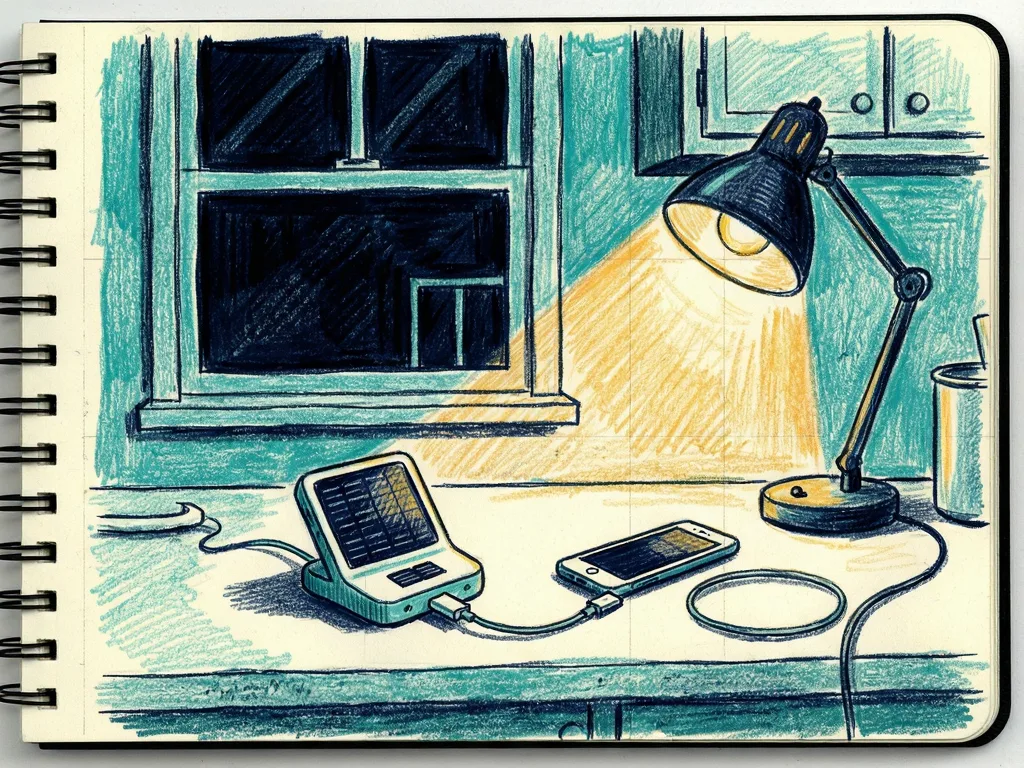
That combination is changing household behavior. Plenty of people are introducing solar power technology to their lives. Not everyone has the opportunity or funds to go off-grid for an entire home, but solar panels are much more efficient and affordable than they were just a few years ago. The practical result is not necessarily full energy independence. It is a growing set of specific gadgets that can be solar-powered where they are most useful.
Portable power stations: emergency capacity, not whole-home independence
A solar portable power station is something every household can use. The article frames it as “the ultimate post-apocalypse purchase,” but its everyday value is less dramatic and more useful. In a blackout or other emergency, it can keep a fridge or freezer working, keep an internet connection alive, and allow devices such as smartphones to stay topped up.
The more interesting point is how solar turns an existing power station into a more self-sufficient tool. If a household already owns a portable power station, there is a good chance one of its charging connections is designed to accept solar panels, either through a compatible third-party or first-party model. Investing in a solar panel kit means the station always has a way to recharge, even when wall power is unavailable.
Placement also matters less than expected. The station does not need to sit in direct sunlight. There is usually a long enough cable to keep the station inside the home, maybe just inside a window, or in the shade while the panels are in full sunlight. That makes the system more practical for households that cannot or do not want equipment exposed to weather and theft.
The Anker SOLIX C1000 is cited as a compact yet powerful 1800W portable power station. It packs 11 different ports, 2400W AC power surge, built-in lighting, and more. It is pitched as a way to charge all your gear or be prepared for an emergency.
For readers, the analytical takeaway is clear: portable power stations are not a replacement for a whole-home backup system. They are selective capacity. They can cover important loads for a limited time, and solar can reduce dependence on grid charging. The uncertainty is whether the station’s power output, port mix, surge capacity, and recharge method match the household’s actual emergency needs.
Video doorbells and outdoor security cameras: solar reduces maintenance friction
Keeping security cameras up and running, no matter what, is actually kind of important. At the very least, adding solar power can reduce how often those batteries need charging.
The example given is a Ring solar charging base used because the Ring doorbell is too far away to feasibly run power to it. The doorbell’s location does not get as much direct midday sun as it could, but the solar base still extends the periods between battery recharges by months. Effectively, that means the device only needs to be charged roughly once a year.
That is a meaningful shift in convenience. It does not make the doorbell independent of power, but it turns a recurring maintenance chore into a rarely needed task.
The broader option is aftermarket solar panels for security cameras, or sometimes official solar upgrades from the manufacturer. This lets a camera be placed anywhere within the Wi-Fi footprint, and it should work indefinitely until its battery wears out or it fails in some other way. That last condition is important: assuming that it gets enough light to avoid the battery draining.
The risk here is environmental and mechanical. A camera in deep shade, mounted at a bad angle, or used with power-hungry features may not get enough light to stay charged. Battery degradation will eventually limit lifespan. Still, for devices that must remain outdoors and far from outlets, solar is not just an eco-friendly accessory. It is a placement solution.
Solar keyboards: small power gains with practical convenience
A solar-powered keyboard may seem like a niche idea, but it solves a common annoyance. Unless you have a wireless keyboard with RGB lights flashing all the time, you probably do not need to worry about changing its batteries very often. Still, at some point in your day, probably just when you are doing something genuinely important, the batteries will run out. At that time, you had better hope you have spares somewhere.
The Logitech Signature Slim Solar+ K980 is presented as a way to stop worrying about that. In total darkness, the keyboard has four months of battery life with typical use. It can also slowly top up using artificial light. You do not even need to expose it to direct sunlight if you do not want to.
That makes it useful in ordinary indoor setups. A keyboard is low-power, often left on a desk, and regularly exposed to ambient light. The Logitech Signature Slim Solar+ runs on solar power and even artificial light, so you never need to plug it in to charge. Its impressive battery life, lightweight, slim design, and multi-device connectivity make it a convenient work companion that you can take anywhere.
The remaining gap is the mouse. The article notes that some solar wireless mice exist, but none that the writer would actually want to use. That matters because a keyboard and mouse are usually a pair. Solving one input device does not eliminate all battery anxiety.
Solar watches: reliability when phones and smartwatches lose power
Smartwatches are great, but they generally have terrible battery life. If you are away from power, you might lose access to critical features such as GPS, the current time, or compass directions, depending on what the model offers.
That is where solar-powered “dumb” and smartwatches become relevant. Casio’s Tough Solar range of G-SHOCK watches has various neat features for different activities, shares a solar-charging ability, and can also use various radio time services to automatically sync to world time.
For people who need smart features, Garmin has a series of solar-charging smartwatches such as the fēnix 9 Pro Solar. The solar version is rated for up to 57 days of battery life in smartwatch mode, almost double the life of the non-solar version. The warning is just as important as the number: readers should read the fine print on any given solar watch so they know under which conditions those numbers were reached.
The logic behind solar watches is stronger than it may first appear. A watch is worn all day, often exposed to light, and consumes far less power than a laptop, camera, or power station. The asterisk in the headline is also accurate: eventually, the battery will wear out. Solar extends service intervals and reduces charging frequency. It does not make the device immortal.
What readers should take from this shift
There is literally a giant nuclear power station in the sky, giving away energy for free. The question is not whether solar is valuable in principle, but where it fits into daily life.
The article’s practical answer is device-level solar. My colleague Bertel King is already charging all his gadgets for free using a limited solar setup, and he has found even more ways to use solar power without a rooftop setup. That suggests a middle path between doing nothing and building a full off-grid home system.
As solar panel technology and batteries get better, more things currently plugged into the wall may be able to extract their energy from the sun. The article also notes the tempting but impractical idea of covering an EV in solar panels and running it without ever plugging in. That remains the emotional appeal of solar: a world where energy is quietly available instead of constantly metered.
For now, the realistic value is narrower. If grid pressure continues, electricity prices stay high, and outages feel more likely, solar gadgets offer households a way to reduce small but annoying points of failure. A power station can bridge an emergency. A doorbell can avoid battery anxiety. A keyboard can stop dying during important work. A watch can keep time and navigation when charging is inconvenient.
None of these devices solves the broader grid problem. That is the uncertainty. Solar gadgets are not a macro-level energy fix, and they do not make every household immune to power pressure. But they are becoming useful household insurance: small, affordable, and increasingly practical when the larger system feels less stable.