US Air Force declares a new emphasis on sensors and autonomous warfare, placing counter-drone kits at the top of its priorities.
Nov 26, 2026
US Air Force Centers Force Design 2026 on Sensors, AI and Autonomous Systems
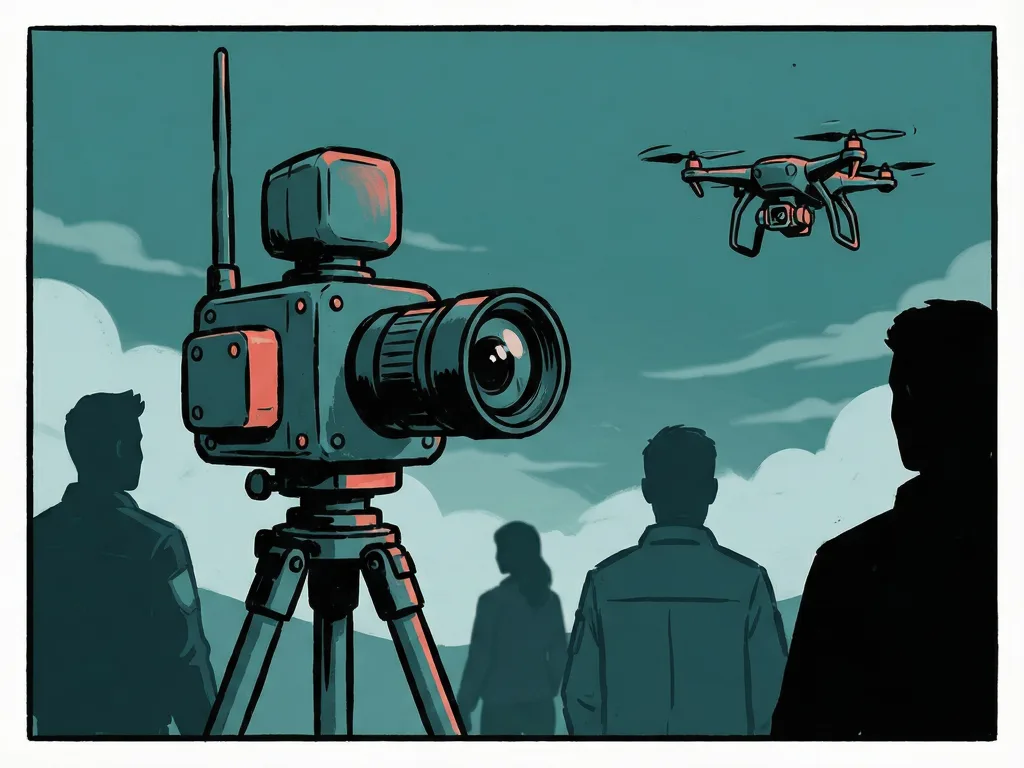
The core judgment is that the US Air Force is moving from an air-defense model built around intercepting incoming threats toward one built around earlier detection, faster coordination and networked responses. Force Design 2026 does not simply add new weapons to existing plans. It changes the center of gravity for modernization: sensors, artificial intelligence, autonomous systems and command networks become more important than standalone interceptors alone.
That shift matters because the Air Force itself says increasingly advanced aerial threats are challenging traditional approaches to generating military airpower. The new framework treats the future fight less as a contest of platform-versus-platform and more as a contest of sensing, tracking, sharing and responding under pressure.
A shift away from interception-first defense
The US Air Force has introduced a new modernization plan that focuses on advanced sensors, artificial intelligence and autonomous systems to counter increasingly advanced aerial threats. Its new Force Design 2026 changes how the service plans to defend against air attacks and prepare for future wars.
The approach prioritizes finding and tracking threats early and coordinating responses, rather than depending mainly on weapons that intercept and destroy incoming aircraft or drones. In practical terms, this means the Air Force is placing more value on the chain that leads to the response: detect the threat, understand it, share it and direct the right effect.
The updated framework identifies sensors, interconnected networks and artificial intelligence as technologies increasingly influencing modern air defense operations. These capabilities could help military forces identify incoming threats, coordinate defensive responses and manage multiple unmanned aircraft operating simultaneously.
That last point is central. Future air threats may not arrive one at a time. They may appear as swarms, mixed formations or dispersed attacks. A defense based only on individual interceptors can become overwhelmed when many unmanned aircraft operate at once. A defense built around sensors, AI and networked coordination aims to handle volume, speed and complexity more efficiently.
Why the Air Force is reordering its priorities
Air Force officials also acknowledge that technological developments are creating difficulties for traditional approaches to generating military airpower. Systems previously considered effective may encounter limitations when confronting increasingly sophisticated weapons and interconnected defensive networks.
This is the analytical reason behind the new plan. The threat is not only faster or higher-flying. It is more networked, more autonomous and more difficult to separate into simple targets. A modern aerial attack may involve reconnaissance, deception, coordination, unmanned aircraft and resilient command links. If the defense still thinks in terms of one platform intercepting one target, it may lose tempo.
Lt. Gen. Chris Niemi, deputy chief of staff for Force Modernization and chief modernization officer, captured the tension directly: “New technologies are enabling fantastic capabilities that were unimaginable just a few years ago, but those same technologies threaten some of the ways we have historically generated airpower.”
That quote is not just a statement about excitement for new technology. It is a warning that the same tools enabling new defense options also erode old assumptions. If sensors, AI and autonomy change how threats operate, they also change how forces must be organized. The Air Force’s previous modernization logic has to be revised because the character of the threat has changed.
The strategy also emphasizes combining autonomous capabilities, advanced detection equipment and command systems with existing aircraft. Such integration would allow different military platforms to coordinate operations, particularly when conventional communications and navigation systems become unavailable.
This is one of the most important operational implications. The future force design is not built around a single new aircraft or one new weapon system. It is built around connection. Detection equipment, autonomous platforms, command systems and existing aircraft need to work as one networked response structure.
That places software, information sharing and automated coordination closer to the center of future air combat operations. In older airpower discussions, platforms often dominated the conversation. In Force Design 2026, the connective tissue becomes more important: how sensors feed AI, how AI supports decision-making, how autonomous systems act, and how commanders coordinate across dispersed forces.
How Force Design 2026 differs from One Force Design
Force Design 2026 replaces the Air Force’s previous modernization framework. The new strategy succeeds the One Force Design framework introduced in October 2024 under former Air Force Chief of Staff Gen. David Allvin.
That earlier document established modernization priorities intended to guide capability development and future operational planning across the service. Its approach divided counter-drone responsibilities into three categories covering short-range, long-range and intercontinental aerial threats.
These classifications provided a structure for considering defensive capabilities against unmanned aircraft operating across different distances. In other words, One Force Design organized the problem by range: short, long and intercontinental.
The revised framework changes the emphasis toward integrating detection technologies, autonomous platforms and command infrastructure. This is a meaningful difference. The new plan is not only asking how far away a threat is. It is asking how the Air Force can see the threat early, fuse information across systems, coordinate responses and keep operating when conventional links are degraded.
Air Force Chief of Staff Gen. Ken Wilsbach described the revised framework as a significant departure from the service’s previous modernization approach. That characterization is important because it signals that this is not a minor update to an existing document. The Air Force is changing the way it thinks about modernization itself.
What the plan says about future combat operations
The operational logic of Force Design 2026 can be reduced to three linked ideas: detect earlier, connect faster, act in coordination.
First, detection moves forward. The Air Force wants sensors that can identify incoming threats before they reach the point of defense. This is not just about having better radars. It is about building a sensing architecture that can handle advanced aerial threats, including drones and other unmanned systems.
Second, networks become more important than individual platforms. The plan emphasizes interconnected networks and artificial intelligence. That means military forces need to share data across sensors, aircraft, autonomous systems and command nodes. The value of a single sensor increases when it is linked to other sensors. The value of a single aircraft increases when it can coordinate with autonomous platforms and command systems.
Third, coordination must survive degraded conditions. The strategy explicitly notes that different military platforms need to coordinate operations, particularly when conventional communications and navigation systems become unavailable. This is a serious battlefield assumption. Future forces may not operate in clean, connected environments. They may have to fight when links are jammed, disrupted or denied.
That is why autonomous systems are becoming central to the Air Force’s future combat planning. Autonomy is not presented here as a futuristic add-on. It is presented as a way to keep operations moving when traditional command-and-control pathways are stressed.
An Air Force spokesperson explained that the latest framework provides continuing guidance for identifying operational weaknesses, developing capabilities and determining modernization priorities.
That guidance is not limited to technology. It is also organizational. The Air Force is trying to decide what weaknesses matter most, which capabilities should be developed first, and how future forces should be structured around those gaps.
The limits of public knowledge and the risks of the new design
There is a major limitation in what can be assessed from outside the Air Force: much of the information remains classified, and all we know is that the Air Force wants coordinated systems capable of operating under increasingly difficult battlefield conditions.
That uncertainty is real. The public discussion describes the direction of the plan, but not the full technical architecture, cost profile, program priorities or implementation schedule. Force Design 2026 tells us what the Air Force says it wants. It does not fully reveal how it will build, test, field and sustain those capabilities.
Still, Wilsbach said the service needed to reconsider established approaches as emerging technologies changed the character of aerial warfare. This suggests that future investments will increasingly account for threats capable of challenging traditional aircraft operations and existing defensive arrangements.
The risk in the new design is not that it is wrong. The risk is that it depends on difficult capabilities working together. Sensors must detect. Networks must transmit. AI must interpret. Autonomous systems must act. Command infrastructure must coordinate. If one layer fails, the whole chain can degrade.
The Air Force is aware of this because the framework specifically addresses operating when conventional communications and navigation systems become unavailable. That means resilience is not optional. It is the central test.
A networked force is powerful when it works. But it is also exposed when its links are attacked, jammed or disrupted. Force Design 2026 does not solve that problem. It identifies it as the problem the modernization effort must address.
What this means for defense planning
For readers following defense technology, the message is clear: the Air Force is no longer treating counter-air and counter-drone challenges as a weapons procurement problem alone. It is treating them as a system-of-systems problem.
The relevant question is no longer only whether the Air Force has enough interceptors. It is whether it can detect threats earlier, share information across platforms, use AI to reduce decision time, coordinate autonomous systems and maintain command continuity under degraded conditions.
That changes the definition of airpower. Traditional airpower generation often emphasized aircraft, weapons, basing and mission generation. The new framework places software, information sharing and automated coordination closer to the center of future air combat operations.
It also changes how success should be measured. A successful modernization effort under Force Design 2026 would not merely deliver more advanced platforms. It would deliver integrated capabilities that make different military platforms work together, even when conventional communications and navigation systems become unavailable.
The Air Force is betting that the next generation of aerial threats will be met not by a single superior weapon, but by a superior network of sensors, AI, autonomous systems and command coordination. That is a more complex ambition than simply buying more interceptors. It is also the only ambition the Air Force appears to believe is sufficient.
This piece is based on the TechRadar report citing DefenseNews.