The director of Sunrise on the Reaping reveals that every Hunger Games movie was initially rated Restricted.
Nov 27, 2026
The central point from Francis Lawrence's remarks is that the Hunger Games movies did not simply aim for a PG-13 rating and land there naturally. Lawrence, the longtime director of The Hunger Games franchise, said in a conversation with Kevin McCarthy that all five films he directed in the series were initially rated R, and that the final PG-13 versions were produced through deliberate editing workarounds.
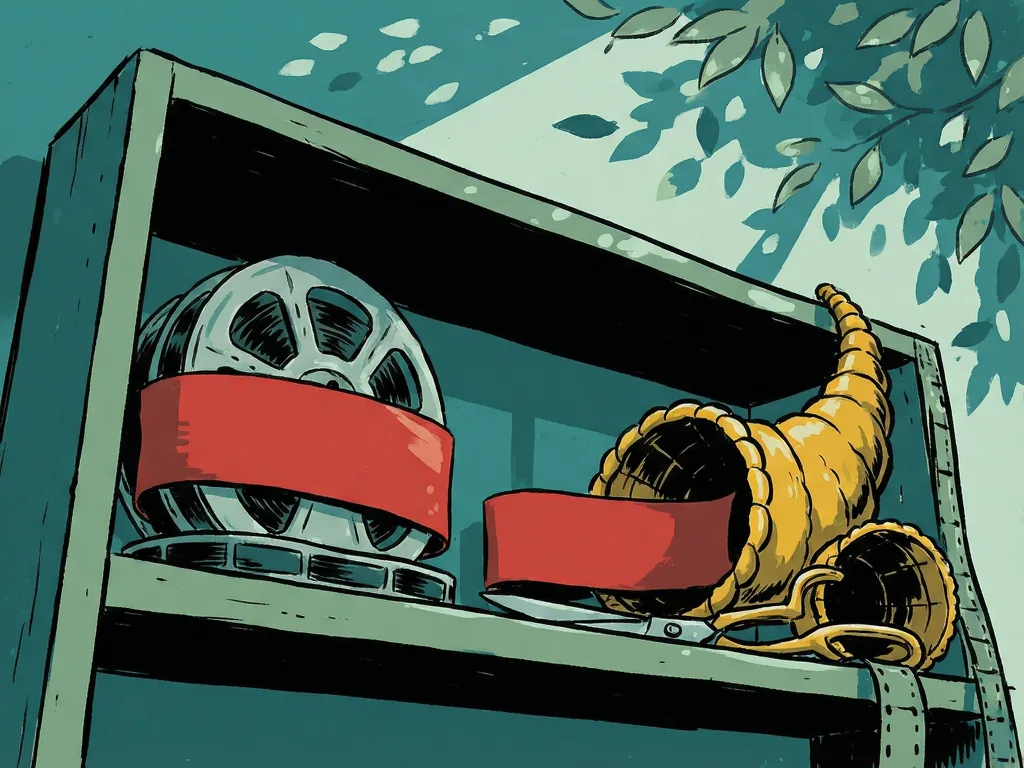
That pattern suggests the franchise's ratings were not fixed outcomes. They were negotiated results, shaped by the Motion Picture Association's judgment of intensity, changing personnel, thematic framing, precedent, and the filmmakers' own strategic choices.
The rating problem is about intensity, not only gore
The Hunger Games franchise sits in an awkward commercial and tonal space. It is based on a young adult novel series aimed at teenagers, but its premise is children being forced to fight to the death in a dystopian society. The books do not hold back on violence. The films, however, have had to walk a fine line in order to reach the widest audience possible. As a result, the process of making the movies PG-13 has been complicated and often inconsistent.
Lawrence described a recurring problem across his career: a filmmaker can make a movie with a PG-13 rating in mind, but the Motion Picture Association still reserves the right to give it an R if it considers the film too "intense," even when there is no excessive blood, gore, language, or nudity. He said this happened with Constantine, was a concern with I Am Legend, and has happened regularly with The Hunger Games series.
That distinction matters because it shows that the rating process is not only a checklist of visible violence. A scene can be flagged because it feels emotionally overwhelming, even if it does not cross a conventional blood threshold. The rating is therefore not just about what is shown; it is also about how intensely the audience is asked to feel it.
A crying child and a neck wound showed the pressure points
One example Lawrence gave involved one of the Mockingjay films. In that case, he had to cut a scene of a little girl crying and screaming over the body of her dead mother. There was no blood in the scene, but the performance was so visceral that it pushed the film closer to an R rating.
Another example was more concrete. Lawrence said certain deaths were more brutal and gratuitous in initial cuts of the films, but ultimately had to be adjusted for a PG-13 rating. He singled out Maysilee's death. In the version he really wanted to keep, the fatal wound was a very specific neck injury. While pointing at the center of his neck, he explained that the killer was covering the wound, and when his hand came off, the audience could see blood starting to drip out of it. The hole was visible, and that explained why Maysilee could not speak. Lawrence said the rating process made them remove that detail, and that losing it "killed" him.
These examples show two different kinds of pressure on the final cut. One is emotional intensity: a child's grief can be treated as harsh as blood. The other is explicit physical detail: a visible wound can be removed even when it serves the story. Together, they reveal how a PG-13 rating can reshape not just action, but also character, trauma, and cause of death.
Lawrence says the process is subjective and can be strategically managed
Lawrence said the rating process is somewhat subjective because the people who rate movies change, their tastes change, and he was able to identify specific changes on particular movies. That subjectivity is not just a behind-the-scenes curiosity. It affects how filmmakers prepare cuts for review.
For Sunrise on the Reaping, Lawrence said he believes the Motion Picture Association has become more "conservative" in its judgment of a film. That perception led him to tweak the project and show it to the organization four or five times.
He also described a tactical approach: sometimes he makes content more intense on purpose when presenting it to the Motion Picture Association. The goal is that, after the organization asks for edits, the later version can look more tame by comparison. One method he mentioned was amplifying sound effects to make a sequence sound gnarlier, then reducing the intensity in subsequent edits.
Lawrence put the strategy plainly: "But I definitely do intensify beyond a limit of where I think it will be accepted as PG-13 purposely, because I know we are going to have to pull back on certain things."
This is a clever workaround, but it also reveals a risk. If the rating decision depends on changing personnel and taste, then filmmakers may need to manage expectations rather than simply finish a movie. The final version can become partly a negotiation artifact. What audiences see may not be the director's first instinct, but the version that survived repeated review.
Thematic framing helps the franchise earn its violence
Lawrence said he is surprised by how much these movies can get away with in a PG-13 context, but he believes the series has thematic relevance that the Motion Picture Association accepts.
He said the large number of films in the franchise has created a precedent. He also said the stories are ultimately anti-violence: they are about the consequences of violence, the consequences of war, and themes that educate people. He believes the association takes that into consideration when looking at intense sequences, because the emotional value is different from pure splatter.
That framing is important for readers. It suggests that the Hunger Games films survive their violence partly because the violence is presented as critique, not spectacle. The movies are allowed to show children fighting to the death because the story treats that system as monstrous. Still, Lawrence's comments also show that this permission is conditional. The same material could be judged differently if the association becomes more conservative or if raters change.
In other words, the franchise's PG-13 status is not only a technical rating. It is a claim about meaning: the violence is supposed to be meaningful, not merely exciting. But that claim only works if the rating reviewers accept the story's moral weight.
The Dark Knight shows that mainstream action films use similar tricks
The Hunger Games films are far from the only big mainstream action movies that have to get creative with how they depict violence. Lawrence's comments connect to a familiar example: The Dark Knight.
Crew members on The Dark Knight were confident the film would be rated R, despite Christopher Nolan and the studio working to avoid that outcome. The film was able to get around a harder rating in part because it placed most of the gorier acts of violence off-screen or even played them off as jokes.
Cinematographer Wally Pfister said in a 2018 interview that it was "kind of shocking" that The Dark Knight ended up being PG-13. He noted that Nolan's movies would be PG-13 to open them up to a wider audience, and said Nolan seemed to have a way with the ratings process.
Pfister described a scene in which a pencil is driven through a man's head as something he expected to block the rating. He said he thought the trick worked because it had enough levity to sell the moment not as raw violence, but as a magic trick and a punchline.
The comparison matters because it shows that the Motion Picture Association's response to intensity is not unique to young adult franchises. Mainstream studio films can also use tone, humor, off-screen staging, and editing to make violent content feel acceptable for a wider audience. The difference is that The Hunger Games has the added challenge of targeting teenagers while depicting children in lethal combat.
What this means for audiences
For audiences, Lawrence's account changes how the Hunger Games films should be read. The PG-13 label is not simply a sign that the movies are safe for teenagers. It is the result of repeated cuts, strategic previews, tonal framing, and negotiation with the Motion Picture Association. Some scenes that might have made the franchise harder to watch were removed or softened not because the story stopped needing them, but because the rating system reacted to emotional intensity and physical detail.
Sunrise on the Reaping is in theaters now, so Lawrence's comments arrive at a moment when the series is continuing in front of audiences. The practical question for viewers is whether the new film carries the same tension between thematic seriousness and commercial rating limits. Lawrence's remarks suggest that it likely does, but that the finished movie may hide more of the editing struggle than the final cut reveals.
The original reporting came from Cade Onder, a freelancer for IGN's news team who covers entertainment including gaming, film, and more. He can be found on Twitter at @Cade_Onder.